
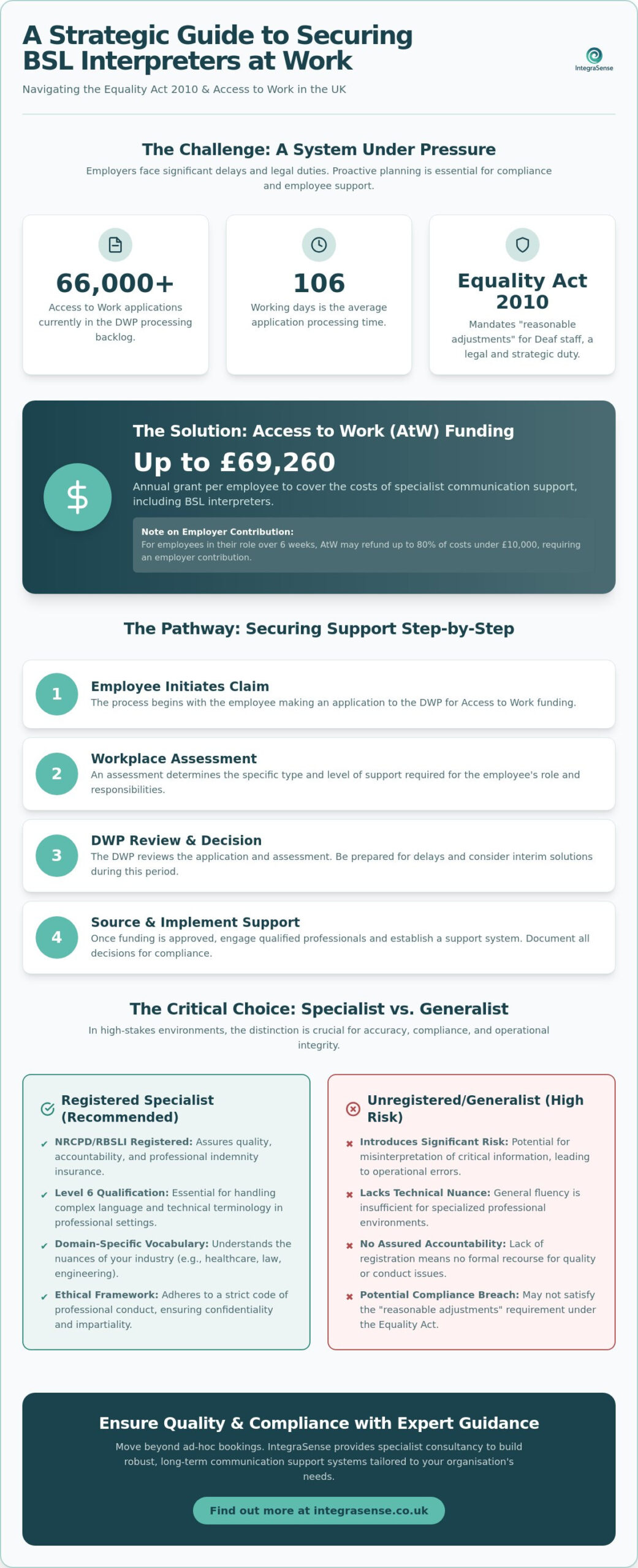
With over 66,000 Access to Work applications currently caught in a processing backlog, the path to workplace accessibility often feels more like a bureaucratic hurdle than a strategic advantage. You likely understand that providing specialist communication support isn’t just a legal checkbox under the Equality Act 2010; it’s a vital component of a high-performing, inclusive team. However, the friction of the application process and the recognized national shortage of qualified professionals can leave even the most forward-thinking organizations feeling stalled. Learning how to get a BSL interpreter for work shouldn’t be a process of trial and error that risks your compliance or your employee’s productivity.
We’ll show you how to master this transition with precision and confidence. This guide clarifies the complexities of the £69,260 annual grant cap, the nuances of “reasonable adjustments,” and the methodology for securing specialists who understand your industry’s technical vocabulary. We’ll examine the actionable steps to optimize your Access to Work strategy and ensure your communication systems remain fluid, professional, and fully compliant with evolving standards. By the end of this article, you’ll have a clear roadmap to transform workplace barriers into a streamlined system of professional harmony.
Key Takeaways
- Master the nuances of the Equality Act 2010 and Access to Work funding to ensure your organization meets its legal obligations without unnecessary financial strain.
- Discover the precise steps of how to get a BSL interpreter for work, from initial DWP applications to sourcing professionals with sector-specific technical vocabulary.
- Identify the critical differences between generalist interpreters and registered specialists to safeguard the accuracy of high-stakes workplace communication.
- Explore how professional supervision serves as a vital safeguard for both the interpreter and the employer, maintaining performance standards and preventing vicarious trauma.
Navigating Access to Work and Workplace Legal Obligations
The Equality Act 2010 establishes a clear mandate for UK employers to implement “reasonable adjustments” for Deaf staff. This isn’t merely a statutory burden; it’s a strategic opportunity to optimize human capital. When an organization provides fluid communication through British Sign Language (BSL), it ensures that technical expertise isn’t lost to systemic friction. Proactive accessibility reduces the risk of tribunal claims while fostering an environment where precision and performance are the standard.
Central to this strategy is the Access to Work (AtW) grant. This Department for Work and Pensions (DWP) initiative provides a maximum annual award of £69,260 to cover the costs of support, including BSL interpreting. For many employers, knowing how to get a BSL interpreter for work starts with securing this funding to offset operational costs. While the grant is substantial, the current administrative climate demands a methodical approach to ensure long-term viability.
The Access to Work Application Process
The journey begins with the employee initiating a claim, followed by a workplace assessment to determine the specific level of support required. Efficiency here is paramount. As of March 2026, the DWP is managing a backlog of 66,000 applications, with average processing times reaching 106 working days. Employers must be prepared to manage these timelines through interim solutions. If an employee has been in their role for more than six weeks, your organization might need to contribute to the support costs. For expenditures under £10,000, Access to Work typically refunds up to 80 percent of the total, making it a highly effective mechanism for managing the costs of how to get a BSL interpreter for work.
Legal Compliance and Defensible Decision-Making
Compliance requires more than just intent; it demands a documented audit trail. Organizations in the public and health sectors must demonstrate defensible decision-making to satisfy statutory requirements. This involves recording every step taken to provide support and the rationale behind specific adjustment choices. Integrating these processes into broader Accessibility Audits ensures that your compliance isn’t just reactive but part of a robust governance framework. IntegraSense provides the specialist consultancy needed to navigate these complex requirements, turning potential legal liabilities into a blueprint for organizational excellence.
Selecting and Booking the Right BSL Interpreter for Professional Settings
Effective communication isn’t a passive outcome; it’s a managed system. When researching how to get a BSL interpreter for work, you must look beyond basic fluency. Professional registration with the National Registers of Communication Professionals (NRCPD) or RBSLI provides the necessary assurance of quality and accountability. These registers confirm that the individual has met rigorous training standards and maintains professional indemnity insurance. In specialized fields like healthcare, engineering, or corporate law, relying on an unregistered or generalist interpreter introduces significant risk to your organization’s operational integrity.
The distinction between a generalist and a specialist is critical. A specialist communication professional brings more than language skills; they possess the domain-specific vocabulary and ethical framework required for high-stakes environments. This ensures that technical nuances aren’t lost in translation, maintaining the precision your industry demands. Moving away from ad-hoc agency bookings toward a long-term partnership with a consultancy allows for a more consistent, reliable service that understands your organizational culture.
Evaluating Interpreter Competency
High-stakes environments demand Level 6 qualifications. This ensures the interpreter can handle complex linguistic structures and industry-specific terminology with precision. You should also evaluate the interpreter’s language profile against the employee’s specific needs, as BSL dialects vary across the UK. Matching these profiles creates a more fluid, natural communication flow. If your requirements are particularly complex, you can explore our specialist communication services for a more tailored approach to workplace support.
Booking Logistics for Organisations
Logistical precision is vital for maintaining communication harmony. For sessions lasting over 90 minutes, co-working is essential. This practice utilizes two interpreters who rotate to prevent cognitive fatigue, ensuring that accuracy remains high throughout the meeting. You should also provide briefing materials, such as agendas or technical glossaries, well in advance. This preparation allows the specialist to internalize specific jargon before the session begins. When utilizing the Access to Work scheme, ensure these logistical requirements are clearly documented to secure the appropriate funding for your team. This methodical approach to how to get a BSL interpreter for work transforms a complex requirement into a streamlined, professional asset.
Ensuring Long-term Quality through Professional Supervision and Consultancy
Long-term accessibility requires more than a successful initial booking. It demands a system designed for durability and operational performance. Once you understand how to get a BSL interpreter for work, your focus must shift toward maintaining the quality and resilience of that communication link. Integrating BSL interpreting into your broader organizational governance ensures that accessibility isn’t an isolated task but a core component of your risk management strategy. This methodical approach aligns with your broader Workplace Legal Obligations, moving your organization from basic compliance toward optimized inclusion.
The Necessity of Professional Supervision
Professional supervision provides a structured, reflective space for practitioners to navigate the ethical and emotional demands of their role. It’s a critical safeguard against vicarious trauma and interpreter burnout, which are significant risks in high-pressure sectors like healthcare or social services. For the employer, supervision acts as a vital quality assurance mechanism. It ensures that the professionals you hire remain sharp, objective, and resilient. Implementing BSL Interpreter Professional Supervision is a hallmark of a defensible accessibility strategy, demonstrating a commitment to professional standards that protects both the staff and the organization’s integrity.
Strategic Accessibility Consultancy
True communication harmony often requires looking beyond the individual interpreter. Multi-disciplinary consultancy and communication audits allow organizations to identify systemic friction before it leads to operational failure. When friction does occur, specialist intervention is often necessary to manage complex interpersonal dynamics. Whether you’re navigating a specific workplace dispute or seeking Conflict Resolution in Kent, third-party mediation ensures that communication remains fluid and professional. IntegraSense positions itself as your visionary partner, providing the technical depth and strategic foresight needed to manage complex accessibility environments. We help you move away from chaotic, ad-hoc fixes toward a cohesive, optimized journey that empowers your entire workforce.
Optimizing Your Path to Workplace Accessibility
Achieving a truly accessible environment requires a transition from reactive compliance to proactive governance. By mastering the Access to Work funding framework and prioritizing registered NRCPD professionals, your organization secures more than just a service; it builds a high-performance communication system. Integrating professional supervision further ensures that this support remains resilient and effective over the long term. Understanding how to get a BSL interpreter for work is the first step in a broader journey toward organizational transformation and inclusive excellence.
IntegraSense provides the specialist consultancy required to navigate these complex environments with precision. Our expertise across the health, education, and public sectors ensures your accessibility strategy remains defensible and robust. We combine technical knowledge of the Access to Work scheme with a network of multidisciplinary professionals to deliver clarity and control over your workplace communication. Contact IntegraSense today to discuss your specialist workplace communication requirements. We’re ready to help you build a more inclusive and efficient professional environment.
Frequently Asked Questions
How much does a BSL interpreter for work cost and who pays?
The Access to Work scheme provides the primary funding for these services, offering a maximum annual award of £69,260 to support disabled employees. While the Department for Work and Pensions often covers the full cost for new employees, organizations typically enter a cost-sharing arrangement if the staff member has been in post for more than six weeks. For costs under £10,000, larger employers may be reimbursed for up to 80 percent of the expenditure.
Can I use an unqualified staff member who knows some sign language instead of a professional?
Relying on unqualified staff members who possess basic signing skills creates substantial legal and operational vulnerabilities. Professional interpreting requires a Level 6 qualification to ensure that complex technical information is conveyed with absolute precision. Using non-professionals fails to satisfy the “reasonable adjustments” mandate of the Equality Act 2010 and exposes your organization to the risks of miscommunication and potential tribunal claims. Specialist communication support is a necessity for maintaining professional standards.
What is the difference between a Trainee (TSLI) and a Registered (RSLI) Sign Language Interpreter?
A Registered Sign Language Interpreter (RSLI) holds a full Level 6 qualification and is authorized for independent practice across all professional settings. A Trainee (TSLI) is a practitioner currently completing their final stages of qualification and should only be used in lower-risk environments. When you’re deciding how to get a BSL interpreter for work for high-stakes meetings or disciplinary hearings, an RSLI is mandatory to ensure linguistic accuracy and full regulatory compliance.
What happens if an Access to Work grant doesn’t cover the full cost of the interpreting I need?
If the cost of support exceeds the annual Access to Work cap, the employer must cover the additional costs to fulfill their legal obligations. Providing these adjustments is a statutory requirement that ensures Deaf professionals can perform their roles without communication barriers. IntegraSense offers expert consultancy to help you navigate these funding complexities, ensuring your organization implements a robust, efficient strategy for how to get a BSL interpreter for work while maintaining long-term financial viability.