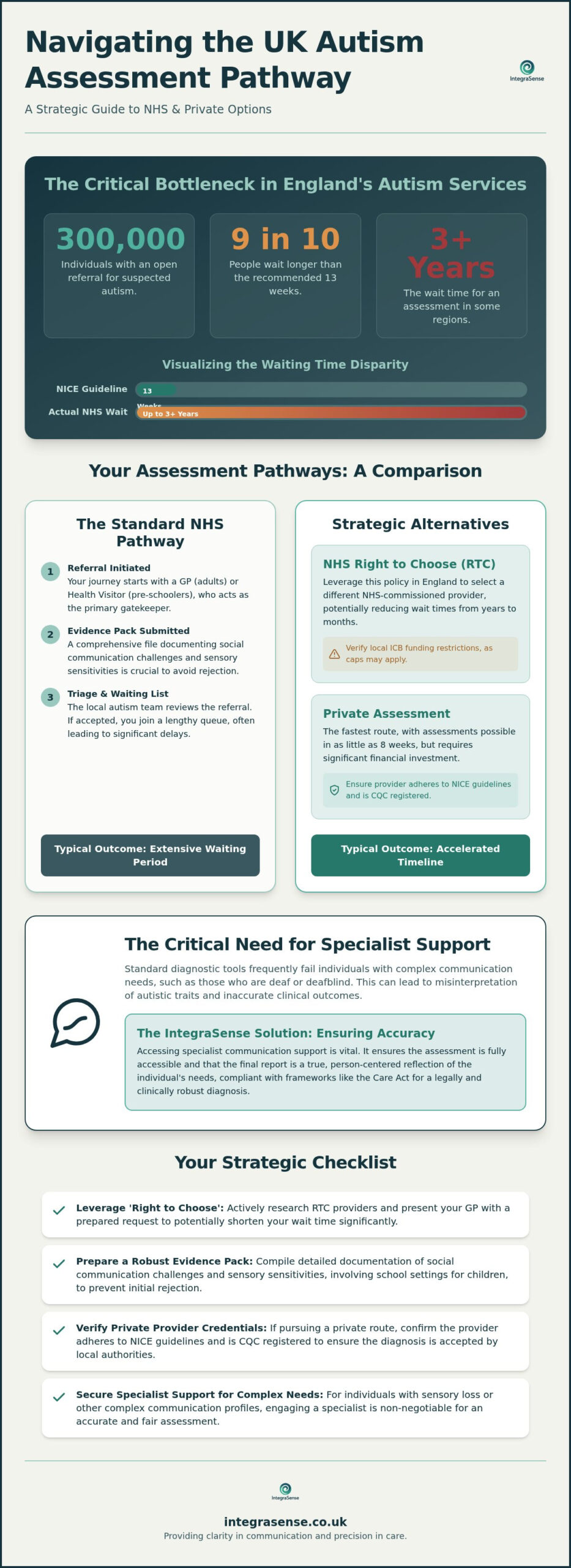
With nearly 300,000 individuals currently holding an open referral for suspected autism in England, the path to a formal diagnosis has reached a critical bottleneck. As of June 2026, nine in ten people have waited longer than the 13 weeks recommended by NICE, with some regional delays extending to three years. Understanding How to Get an Autism Assessment on the NHS – Waiting Times & Private Options is no longer a matter of simple patience; it requires a strategic grasp of statutory rights and system fluidity.
We recognize the frustration of managing bureaucratic friction while seeking essential support. This guide provides the professional authority needed to navigate the UK diagnostic landscape with precision. We’ll examine the Right to Choose policy, evaluate private alternatives, and highlight how IntegraSense facilitates communication harmony for those with complex needs. Our goal is to provide a logical roadmap for achieving clarity in an increasingly congested environment.
Key Takeaways
- Identify the strategic roles that GPs and educational settings play as primary gatekeepers in initiating the autism diagnostic pathway.
- Leverage the Right to Choose policy in England to understand How to Get an Autism Assessment on the NHS – Waiting Times & Private Options and potentially reduce waiting times from years to months.
- Evaluate the necessity of specialist communication support for individuals with sensory impairments to ensure diagnostic outcomes are accurate, defensible, and person-centered.
- Transition from a formal diagnosis to functional support by aligning your strategy with statutory frameworks such as the Care Act and Access to Work.
The NHS Autism Assessment Pathway: From GP Referral to Diagnosis
Navigating the complexities of How to Get an Autism Assessment on the NHS – Waiting Times & Private Options begins with the GP, who serves as the central gatekeeper for adult referrals. For pre-schoolers, health visitors typically initiate the process. In 2026, the clinical landscape requires more than a simple conversation. You need a robust evidence pack to prevent immediate rejection by the local Integrated Care Board (ICB). This pack should document specific social communication challenges and sensory sensitivities. For school-aged children, educational settings are often better positioned to provide this evidence; teachers observe peer interactions that aren’t visible in a clinical consultation.
Once submitted, the referral enters the First Response protocol. This is a triage phase where the local autism team reviews the documentation against the clinical criteria for a Diagnosis of autism. If the evidence is insufficient, the referral is often returned, adding months to an already lengthy timeline. Ensuring your submission is comprehensive from the outset is the most effective way to avoid bureaucratic friction.
Adult vs. Child Assessments: Key Differences in 2026
Adults face unique hurdles, specifically the masking phenomenon where years of social adaptation hide core traits. Unlike children, who benefit from multidisciplinary teams including speech and language therapists, adults often navigate a sparser system. If sensory loss is suspected alongside neurodivergence, ensuring a Care Act compliant deafblind assessment is essential for legal and clinical accuracy. At IntegraSense, we provide specialist communication support to ensure that complex needs are correctly interpreted during these high-stakes evaluations. Understanding How to Get an Autism Assessment on the NHS – Waiting Times & Private Options starts with securing this professional foundation.
NHS Right to Choose and Waiting Times: Strategic Options
The Right to Choose (RTC) policy serves as a critical strategic lever for those facing the current NHS backlog. In 2026, standard NHS trusts frequently report delays of up to three years, yet RTC providers often offer significantly shorter windows. However, Integrated Care Boards (ICBs) are increasingly imposing local funding restrictions for the 2026/2027 period, which can limit the availability of these alternative pathways. Understanding How to Get an Autism Assessment on the NHS – Waiting Times & Private Options requires verifying if your local ICB has set reduced activity levels, as some have already capped the number of assessments they will fund through March 2027.
Clinical accuracy and statutory recognition remain the primary concerns when choosing between public and private routes. While private assessments can be completed in as little as eight weeks, they require a significant financial investment. Local authorities occasionally contest private reports if they don’t mirror the multidisciplinary approach used in the NHS. To ensure your results are robust, research the autism assessment process to confirm your chosen provider adheres to NICE guidelines and maintains CQC registration.
Navigating the Right to Choose Process
Securing an RTC referral requires a proactive approach with your GP. Many primary care clinicians remain unfamiliar with the legal frameworks surrounding neurodivergence, so presenting a pre-prepared request that includes your chosen provider’s details can streamline the process. If you relocate between ICB areas, your waiting time should technically be preserved, though bureaucratic friction often necessitates persistent follow-up. For individuals with complex communication profiles, IntegraSense provides specialist communication support to ensure that the assessment remains accessible and the final report is a true reflection of the individual’s needs.
Beyond Diagnosis: Specialist Support for Complex Communication Needs
Standard diagnostic tools frequently fail to account for sensory loss, creating a risk of inaccurate clinical outcomes. When investigating How to Get an Autism Assessment on the NHS – Waiting Times & Private Options, it’s vital to recognize that a standard referral may not meet the needs of deaf or deafblind individuals. Without specialist intervention, the diagnostic journey often stalls at the first hurdle of communication. These gaps in perception can lead to a misinterpretation of autistic traits, making the need for a tailored approach paramount.
Accessing specialist communication support ensures that assessments are both accurate and defensible. This level of precision is only possible when practitioners receive BSL interpreter professional supervision, which provides the strategic oversight necessary for ethical practice. Adhering to the Mental Capacity Act and the Equality Act protects the individual’s rights while ensuring organizational compliance. By integrating these specialized layers, you transform a potentially chaotic process into an optimized pathway.
Ensuring Defensible Decisions in Health and Social Care
Failure to utilize qualified professionals for a statutory deafblind assessment exposes organizations to significant legal risk. In cases of dispute, expert witness services offer the clarity needed to resolve complex disagreements regarding support provision. Kent-based organizations should prioritize auditing their communication frameworks to ensure they align with modern accessibility standards. A holistic approach to How to Get an Autism Assessment on the NHS – Waiting Times & Private Options moves the focus from mere procedural completion to sustainable, person-centered outcomes.
Securing Clarity in the Diagnostic Journey
Achieving a successful diagnosis requires more than patience; it demands a proactive approach to statutory rights and professional evidence gathering. By leveraging the Right to Choose policy, you can navigate the current landscape of How to Get an Autism Assessment on the NHS – Waiting Times & Private Options with greater efficiency. For those managing complex communication profiles or sensory loss, specialist intervention and BSL expertise are requirements for clinical accuracy.
Based in South East England, our consultants provide the oversight needed to ensure every decision is defensible and person-centered. Contact IntegraSense for specialist consultancy on complex communication and sensory assessments to secure the clarity you deserve. We’re here to help you move beyond the wait and toward a functional, supported future.
Frequently Asked Questions
What is the ‘Right to Choose’ for autism assessments in England?
Right to Choose is a legal framework in England that allows patients to select an alternative, NHS-funded provider for their first outpatient appointment. This includes private clinics that hold existing NHS contracts. It’s a strategic tool for those looking at How to Get an Autism Assessment on the NHS – Waiting Times & Private Options to bypass local trust backlogs while maintaining clinical validity.
How long are the current NHS waiting times for autism assessments in 2026?
As of June 2026, standard NHS wait times often exceed 24 months, with some regional trusts reporting delays of three years. For school-age children, specific areas face wait times of up to seven years. With nearly 295,000 open referrals currently active in England, understanding How to Get an Autism Assessment on the NHS – Waiting Times & Private Options is vital for timely intervention. For families managing these delays, the Autism & Brain Institute provides specialized pediatric speech-language pathology and occupational therapy for children with neurodevelopmental differences.
Will my local authority accept a private autism diagnosis for an EHCP?
Will my local authority accept a private autism diagnosis for an EHCP?
Local authorities must accept a private diagnosis for an Education, Health and Care Plan (EHCP) provided the assessment is multidisciplinary and adheres to NICE guidelines. However, bureaucratic friction occurs if the report lacks the specific clinical rigor expected by the Integrated Care Board. Ensuring your provider is CQC-registered and uses recognized diagnostic tools is the best way to secure a defensible outcome. Once support is approved, families often turn to Divergent Trails for ABA-based therapy and educational support for neurodivergent children to help them reach their potential.
You can certainly obtain an assessment, but standard clinical environments often lack the specialist communication support required for deaf or hard-of-hearing individuals. Standard diagnostic tools may fail to distinguish between autistic traits and sensory processing differences. To ensure an accurate result, organizations should utilize qualified BSL interpreters and practitioners experienced in sensory loss to meet the requirements of the Equality Act and Care Act.