For professional organisations in Kent, ensuring genuine accessibility is a critical component of risk management and statutory duty. It moves far beyond basic physical compliance to encompass the complex and often nuanced world of communication. Securing a meaningful accessibility audit quote Kent professionals can rely on means finding a partner who understands that true inclusion is built on clear policy, robust practice, and specialist communication support.
A superficial, ‘tick-box’ audit fails to address the core requirements of legislation like the Equality Act 2010 and does little to support the defensible decision-making required in public sector, health, and educational environments. This guide outlines what a comprehensive accessibility audit should cover, how to evaluate a quote, and how to translate findings into lasting, person-centred change for your organisation.
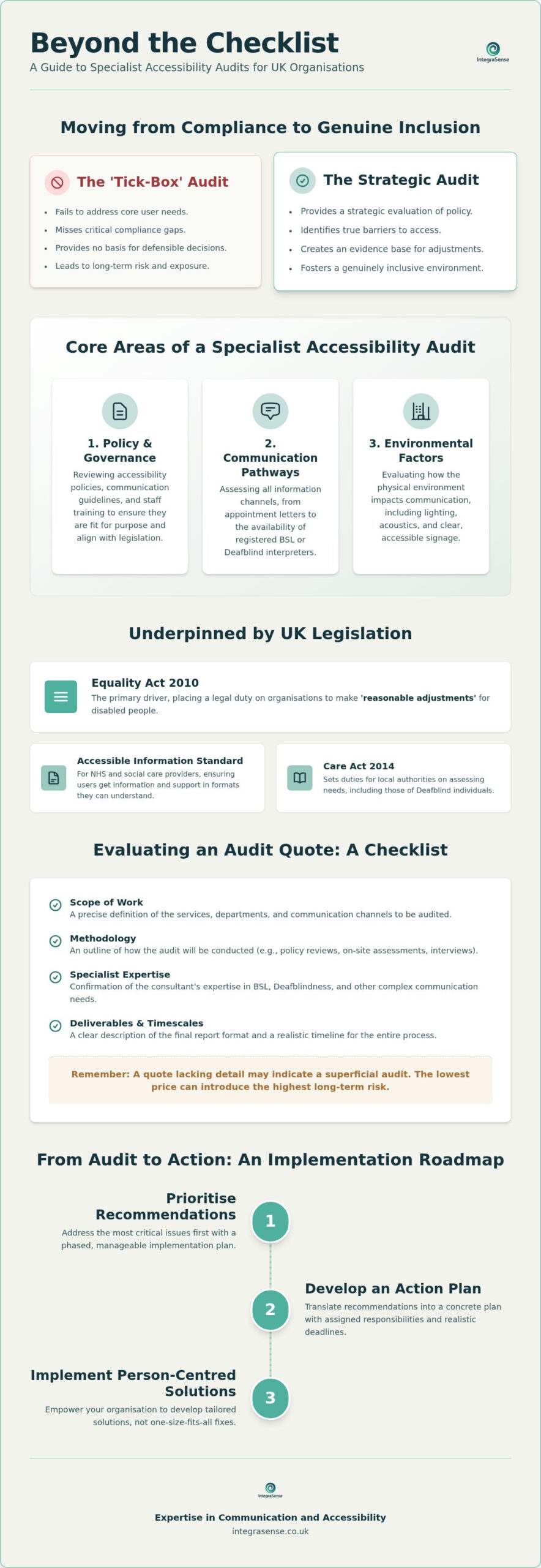
What a Specialist Accessibility Audit Covers
A specialist accessibility audit is not a structural survey. Instead, it is a strategic evaluation of your organisation’s policies, practices, and communication pathways. The objective is to identify barriers that prevent people with sensory and communication needs from accessing your services on equal terms. This process provides the evidence base for making reasonable adjustments and fostering an inclusive environment.
A thorough audit focuses on three core areas:
- Policy and Governance: Reviewing your existing accessibility policies, communication guidelines, and staff training protocols to ensure they are fit for purpose and align with current legislation.
- Communication Pathways: Assessing how your organisation shares information. This includes everything from appointment letters and website content to the availability of registered and regulated interpreters for British Sign Language (BSL), International Sign, or Deafblind individuals.
- Environmental Factors for Communication: Evaluating how the physical environment impacts communication. This is not about building regulations but about practical elements like lighting, which affects lipreading and sign language visibility; acoustics, which impact hearing aid users; and clear, accessible signage for navigation.
The Legal and Professional Context
In the UK, the primary driver for accessibility is the Equality Act 2010, which places a duty on organisations to make ‘reasonable adjustments’ for disabled people. A specialist audit provides a clear framework for identifying and implementing these adjustments in a way that is proportionate and effective.
For organisations working in health and adult social care in England, other specific standards apply. The Care Act 2014 sets out duties for local authorities regarding the assessment of needs, including those of Deafblind individuals. Furthermore, the Accessible Information Standard directs all providers of NHS care or publicly funded adult social care to ensure people receive information in formats they can understand and get the communication support they need.
An audit helps your organisation navigate these duties by creating an evidence-led record of your decision-making process, strengthening your position and demonstrating a proactive commitment to compliance.
What a Quote for an Accessibility Audit Should Itemise
When you request a quote for an accessibility audit in Kent, the detail it contains is a strong indicator of the provider’s professionalism. A credible quote will move beyond a single headline figure and break down the specific activities involved. Look for clear itemisation that includes:
- Scope of Work: A precise definition of the services, departments, and communication channels to be audited.
- Methodology: An outline of how the audit will be conducted, such as policy document reviews, on-site assessments of communication environments, and confidential interviews with staff or service users.
- Specialist Expertise: Confirmation of the consultant’s expertise in relevant areas, particularly in assessing needs related to BSL, Deafblindness (including hands-on signing), and other complex communication requirements.
- Deliverables: A clear description of the final report, including its format, the level of detail it will contain, and a commitment to providing actionable, prioritised recommendations.
- Timescales: A realistic timeline for the audit process, from the initial consultation to the delivery of the final report.
From Audit to Action: Implementing the Findings
The most valuable output of an accessibility audit is a clear, actionable report that serves as a roadmap for improvement. The goal is not simply to identify problems but to provide practical solutions that your organisation can implement. The report should enable you to make defensible decisions about where to invest time and resources for the greatest impact.
Key steps in this phase include:
- Prioritising Recommendations: The audit findings should be prioritised to help you address the most critical issues first. This allows for a phased implementation plan that is manageable and effective.
- Developing an Action Plan: Work with the consultant to translate the recommendations into a concrete action plan with assigned responsibilities and realistic deadlines. This plan forms the basis of your strategy for making reasonable adjustments.
- Implementing Person-Centred Solutions: Effective adjustments are rarely one-size-fits-all. The audit should empower your organisation to develop person-centred solutions, whether that involves providing BSL interpreters for appointments, offering documents in alternative formats, or improving the acoustics in meeting rooms.
Ongoing Governance: Quality Assurance and Professional Supervision
Accessibility is not a one-off project but a continuous process of improvement. After the initial changes have been implemented, it is vital to embed accessibility into your organisation’s culture and governance structures. This ensures that standards are maintained and that your organisation can adapt to new challenges and evolving best practices.
Two key mechanisms for achieving this are:
- External Quality Assurance (EQA): Engaging an external body to periodically review your accessibility practices provides independent verification that your standards remain high. EQA helps identify any drift from established policies and ensures your services continue to meet statutory requirements.
- Professional Supervision: For staff members responsible for implementing accessibility measures or providing direct communication support, professional supervision is essential. It provides a structured space for them to reflect on their practice, discuss complex cases, and receive expert guidance. This not only enhances their skills but also supports their well-being and promotes resilient, high-quality service delivery. You can learn more about what professional supervision is and who needs it in our detailed guide.
By investing in these ongoing processes, your organisation demonstrates a deep-seated commitment to inclusion that goes far beyond initial compliance and builds a truly accessible and supportive environment for everyone.
Frequently Asked Questions
What should be included in a quote for a specialist accessibility audit in Kent?
A comprehensive quote should clearly itemise the scope of the audit, the methodology to be used, the specific deliverables (such as a detailed report with prioritised recommendations), and confirmation of the consultant’s specialist expertise in areas like BSL and Deafblind communication support. It should focus on assessing policies, practices, and environmental factors that impact communication.
How does a specialist communication audit differ from a standard building audit?
A standard building audit typically focuses on physical compliance with building regulations, such as the presence of ramps and accessible toilets. A specialist communication audit concentrates on how people with sensory impairments access information and services. It evaluates policies, staff training, communication pathways, and environmental factors like acoustics and lighting, which are critical for effective communication but often overlooked in a standard survey.
What legal standards inform communication accessibility in England?
The Equality Act 2010 is the primary legislation, requiring organisations to make ‘reasonable adjustments’ to ensure their services are accessible. For providers of NHS or publicly funded adult social care, the Accessible Information Standard sets out specific requirements for providing information and communication support. An audit helps ensure your practices align with these and other relevant duties, such as those under the Care Act 2014.
When should our organisation review its accessibility measures?
There is no fixed statutory timescale for reviewing an accessibility audit. However, it is considered best practice to conduct a review following any significant operational, environmental, or regulatory changes. This ensures your accessibility measures remain relevant, effective, and compliant with the latest standards and legislation.