
Conference access should be planned around communication, not added at the lectern. Arranging British Sign Language (BSL) interpreting involves more than assigning a place on stage. The event’s purpose, audience and structure all influence how communication support fits into the wider experience. A specialist BSL interpreter for conferences can support communication across presentations and discussions, but effective planning also depends on clear coordination between organisers, speakers and event staff.
A considered plan connects the needs of Deaf attendees with the conference format, the information available to interpreters and the roles of speakers and staff. This guide explains how interpreting contributes to communication access, what organisers can prepare and how to include support in event delivery. It offers practical points to help you set priorities and plan with IntegraSense.
Key Takeaways
- Include BSL interpreting in conference communication planning so BSL users can engage with spoken presentations and discussion.
- Map the event format and programme, then share relevant presentation materials and specialist terminology to support preparation.
- Agree how speakers, event staff and the interpreting team will communicate, including how programme changes will be shared.
- Plan for interpreted interaction in the session schedule, and discuss the event context and communication needs with IntegraSense.
What a specialist BSL interpreter for conferences contributes to communication access
BSL interpreting supports communication between people using BSL and people communicating in spoken language. At a conference, this can make presentations, panel exchanges and audience contributions accessible to BSL users. The interpreter conveys meaning between languages rather than translating word for word. The subject matter, speakers and pace all shape the interpreting context.
Conference access involves more than following a keynote. Attendees may also want to follow a debate, ask a question or take part in discussion. Consider these different activities when reviewing the programme and communication needs of participants. IntegraSense provides BSL interpreting and specialist communication support for complex environments.
How conference format shapes interpreting preparation
Different session formats create different communication demands. A presentation may follow a planned sequence, while a panel can move quickly between speakers and topics. Audience discussion brings additional contributions and changes in pace. Identifying these formats helps organisers and the interpreting team understand how communication is expected to unfold.
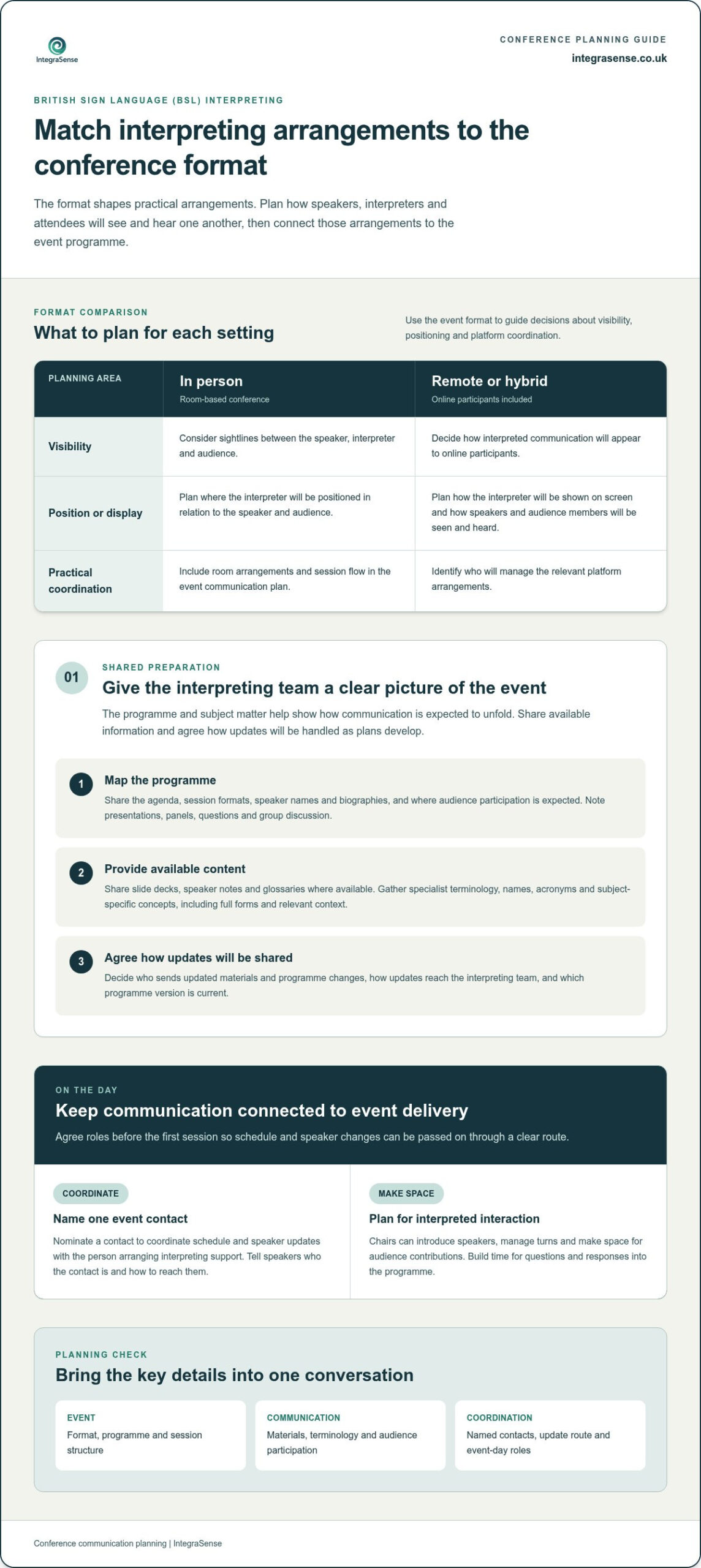
Share the programme as planning information, including session types, speakers and where interaction is expected. For each session, note whether it includes prepared talks, questions, panels or group discussion. If the schedule or format changes, share the update promptly so the arrangements can be considered against the revised plan. This connects communication support to the event’s actual flow, rather than treating each session as an isolated item.
How to prepare a conference for specialist BSL interpreting
Start by identifying whether the conference is in person, remote or hybrid. The format affects practical arrangements, including where the interpreter will be positioned or shown on screen and how speakers and audience members will be seen and heard. For an in-person event, consider sightlines between the speaker, interpreter and audience. For a remote or hybrid event, decide how the interpreted communication will appear to online participants and who will manage the relevant platform arrangements.
Next, share the programme and available presentation materials. Specialist terminology, names, acronyms and subject-specific concepts can be gathered in one briefing document. Include slide decks, speaker notes and glossaries where available, and identify who will send updated versions if the content changes. IntegraSense provides tailored BSL interpreting services for conference communication needs.
What organisers can share before the event
Give the interpreting team a clear overview of the event scope. Useful information includes the agenda, session formats, speaker names and biographies, and the expected level of audience participation. If a presentation uses unfamiliar acronyms or specialist terms, include their full forms and any relevant context. This helps the team prepare for the subject matter and follow how key concepts are used during the conference.
Preparation should continue as the programme develops. Agree who will communicate changes, how updates will be shared and which version of the programme is current. This is particularly useful if a speaker is substituted, a session moves or timings change. A single, clear update route reduces the chance of different people working from different schedules.
Integrating BSL interpreting into conference delivery and next steps
On the day, interpreting should be part of the event’s communication plan. The interpreting team needs a clear route for receiving practical updates, while speakers and event staff need to know who is coordinating them. Agree these roles before the first session so information can be passed on if a speaker changes, a session overruns or the programme shifts.
A practical event-day communication plan
Nominate one event contact to coordinate schedule and speaker updates with the person arranging interpreting support. Tell speakers who that contact is and how to reach them. If a panel order changes or a presentation is replaced, communicate the update directly through the agreed route instead of relying on informal messages reaching everyone.
Make the session structure workable for communication. Chairs can introduce speakers, manage turns during discussion and make space for audience contributions. Build time for questions and responses into the programme rather than letting interpreted interaction be squeezed out when a presentation runs long. Clear turn-taking helps attendees follow the exchange and contribute.
Brief event staff on the coordination plan, including who handles programme changes and how updates will reach the relevant people. This is useful at conferences with parallel sessions, where different rooms may have separate chairs or technical teams. IntegraSense provides specialist communication support for complex environments and can discuss how the conference context and communication needs inform BSL interpreting arrangements.
Make your next planning decision count
Plan for communication access from the outset. Bring the programme, session content and attendee communication needs into the same discussion, so interpreting arrangements can be shaped around the event rather than added at the end. Consider how attendees will follow presentations, contribute to discussions and access changes to the programme.
IntegraSense works with organisations in complex environments, bringing specialist communication expertise to conference planning. Share the format, subject matter and key questions you are working through to begin shaping an approach that fits your event.
Frequently Asked Questions
What does a BSL interpreter do at a conference?
A BSL interpreter conveys communication between BSL users and people speaking aloud, including during presentations and informal exchanges. They can interpret a speaker’s explanation and support communication as attendees respond. The interpreter conveys the meaning being expressed, so clear speech, turn-taking and well-managed discussion help communication flow.
How should organisers prepare for conference interpreting?
Share a clear picture of the conference and its subject matter with the person coordinating interpreting. If materials are still changing, agree who will circulate updated versions so the team has the latest information. A list of unfamiliar names, acronyms and specialist terms can also provide useful context, particularly when speakers introduce new terminology during their sessions.
When should I arrange a BSL interpreter for a conference?
Include interpreting in event planning while the format and programme are taking shape, rather than waiting until every detail is final. Early discussion gives organisers and the interpreting team an opportunity to consider the format, content and communication needs together. If details are still evolving, share what is known and update the plan as the event develops.
Can a conference interpreter support audience questions and discussion?
Yes. Interpreting can support questions and discussion as well as prepared talks. The chair can acknowledge each contributor, allow one person to speak at a time and repeat a question if it was difficult to hear. A brief pause after an audience question, before inviting a panellist to respond, can help make each part of the exchange clear.
To discuss BSL interpreting for your conference, share your event format, subject matter and communication requirements with IntegraSense through the contact page.