
Could an informal conversation resolve a workplace concern, or leave someone feeling unheard? It is understandable to look for a less formal route, particularly when a full grievance process feels disproportionate. The phrase ‘alternatives to formal grievance procedure UK’ describes several different options, not one process that suits every concern. The right response depends on what happened, what needs to change and whether everyone can take part safely and meaningfully.
This guide explains what informal discussion, mediation and investigation are designed to achieve, and when each may be suitable. It also clarifies why investigation has a different purpose from mediation, and is usually part of formal complaint handling rather than an alternative to it. Where communication, impartiality or complexity makes resolution harder, specialist mediation or complaint handling and investigation support can bring structure and clarity.
Key Takeaways
- Choose a route by identifying the concern and the outcome sought, rather than assuming one option fits every situation.
- Use informal discussion where people can engage constructively, but consider whether the concern calls for a more structured response.
- Recognise the difference between mediation, which supports dialogue, and investigation, which examines a concern.
- Clarify the issue, select a proportionate route and consider specialist support when impartiality or communication needs affect participation.
Alternatives to a formal grievance procedure: what the options can address
Choosing a constructive response can be difficult when a concern affects working relationships but does not seem to call for the same process as every other issue. Organisations searching for alternatives to formal grievance procedure UK may be weighing several routes for discussing or addressing a workplace concern. These are not automatic substitutes for formal procedures. The right fit depends on what has happened and what needs to change.
A direct conversation may help when people feel able to speak openly and want to clear up a misunderstanding. For example, colleagues who disagree about what information should be shared at handover might use a focused discussion to clarify expectations. A manager-supported discussion can add structure, especially if someone would value help setting out the issue or agreeing next steps. Mediation uses a neutral facilitator to support dialogue between participants who are able to engage. Complaint handling or investigation serves a different purpose: it focuses on examining a concern, rather than facilitating a conversation towards agreement. IntegraSense provides specialist mediation and investigation services tailored to the context.
What makes an alternative appropriate for a workplace concern?
Consider the concern’s nature and seriousness, the people involved and the outcome sought. Is the priority to restore communication, clarify expectations or have an allegation examined? A conversation may suit a specific misunderstanding. Where accounts conflict or relevant information needs to be considered, discussion alone may not address the issue. Communication needs should also shape how people can participate meaningfully, including whether they need a different format or support to understand and contribute to the discussion.
No one should be pressured into an informal discussion if it feels unsafe or unsuitable. Consider whether the people involved can speak freely, whether there is a power imbalance and whether the concern involves conduct that needs to be examined rather than discussed towards agreement. If an informal route does not address the concern, or the issue calls for a formal response, the organisation’s formal process may still be needed. An alternative can be a proportionate starting point, not a reason to leave an unresolved matter unaddressed.
How to choose between informal resolution, mediation and investigation
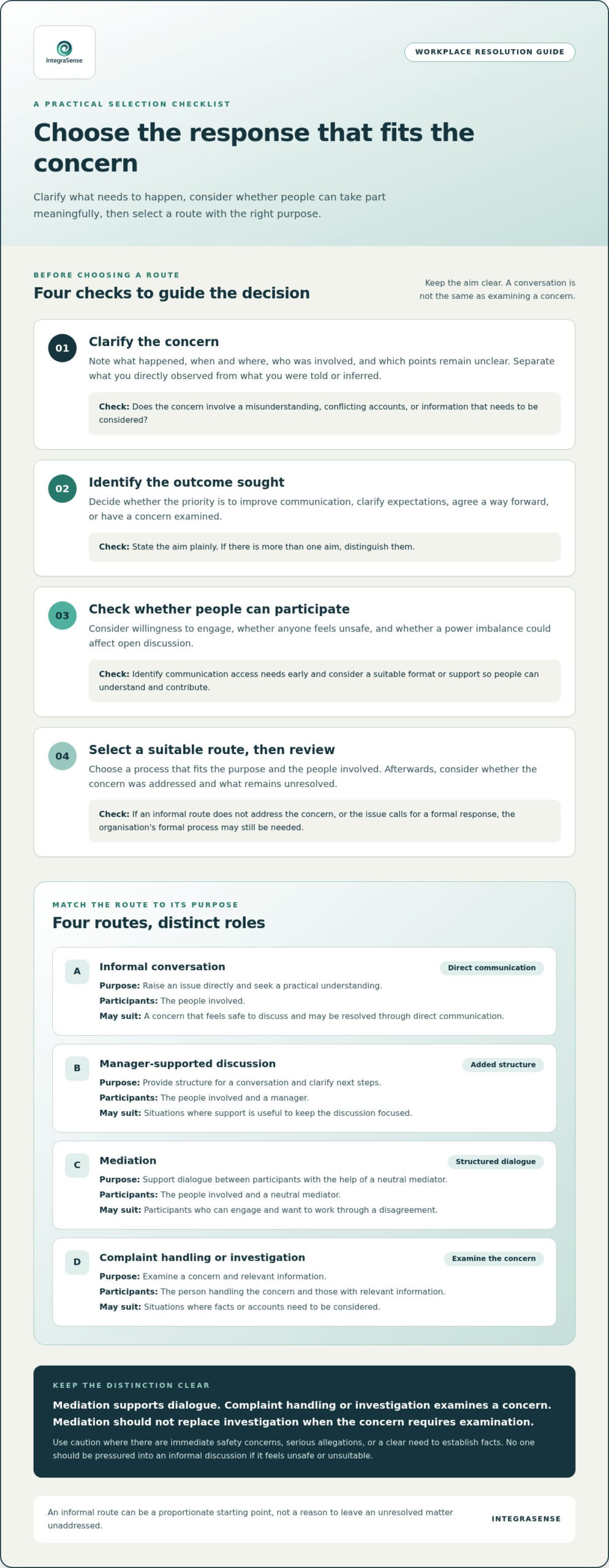
Choose the route according to what the response needs to achieve. The options differ in purpose, the role of the people involved and whether the focus is dialogue or examining a concern.
| Route | Purpose | Who participates | May suit |
|---|---|---|---|
| Informal conversation | Raise an issue directly and seek a practical understanding | The people involved | A concern that feels safe to discuss and may be resolved through direct communication |
| Manager-supported discussion | Provide structure for a conversation and clarify next steps | The people involved and a manager | Where support is useful to keep discussion focused |
| Mediation | Support structured dialogue between participants | The people involved and a neutral mediator | Where participants can engage and want to work through a disagreement |
| Complaint handling or investigation | Examine a concern and relevant information | The person handling the concern and those with relevant information | Where facts or accounts need to be considered |
Before deciding, ask what the process needs to do. Consider whether anyone feels unsafe taking part, whether participants are willing and able to engage, and whether a power imbalance could affect open discussion. Identify communication access needs early and consider how the process can accommodate them. Then state the aim plainly: improve dialogue, agree a way forward or establish what happened. If more than one aim matters, distinguish them so that a conversation intended to repair communication is not mistaken for an examination of the concern.
When might mediation or a structured conversation be unsuitable?
Use caution where there are immediate safety concerns, serious allegations or a clear need to establish facts. Mediation supports dialogue, but should not replace investigation when the concern requires examination. Consider the organisation’s procedure and the nature of the concern when deciding on a proportionate next step. IntegraSense offers specialist mediation and investigation services tailored to the situation.
Getting impartial support for a workplace resolution
A clear next step begins with a precise account of the concern. This sequence can help keep decisions focused:
- Clarify the concern. Record what happened, when and where it took place, who was involved and which points remain unclear. Separate what you directly observed from what you have been told or inferred.
- Identify the desired outcome. Decide whether the priority is to improve communication, address a specific issue or have a concern examined. Be clear about what a useful next step would look like.
- Select a suitable route. Consider which process best fits that purpose and the people involved. Take account of willingness to participate, communication needs and whether facts need to be examined.
- Review what remains unresolved. Assess whether the response addressed the concern and identify any questions or issues that remain. Consider what further action may be appropriate.
IntegraSense provides specialist Mediation Services and distinct Complaint Handling & Investigation Services, tailored to the context. Mediation supports structured dialogue; complaint handling and investigation focus on examining a concern. Keeping those purposes distinct helps organisations choose support that fits the issue. Further information about mediation and investigation services can help clarify how these forms of support differ.
How specialist facilitation can support clear and fair dialogue
A neutral mediator can structure a discussion, help participants share their perspectives and keep attention on the issues. This does not guarantee agreement or a particular outcome. Where communication needs affect participation, tailored support can help people engage meaningfully. Specialist support can also help clarify whether the matter is suited to dialogue or calls for a different form of consideration.
To discuss impartial support for a workplace situation, contact IntegraSense.
Choose a clear next step
A constructive response begins with a considered choice that reflects the concern and the people affected. Keep the organisation’s procedure in view, and do not let an informal approach prevent a matter from receiving appropriate consideration. Be clear about the purpose of the route you choose, who needs to take part and what remains unresolved. That gives everyone a more practical basis for deciding what should happen next.
IntegraSense provides specialist, context-tailored support for workplace resolution. If you would like to discuss which form of support may fit your situation, contact IntegraSense to discuss specialist support for workplace resolution.
Frequently Asked Questions
Can a workplace issue be resolved without a formal grievance?
Yes, some workplace issues can be addressed through a direct or facilitated conversation, depending on the circumstances. A disagreement about how shift handovers are managed, for example, might be clarified by agreeing what information colleagues need to share. Informal resolution is not suitable for every concern. If the matter is serious, feels unsafe to discuss or remains unresolved, the organisation’s formal process may be appropriate.
Is mediation an alternative to a grievance procedure?
Mediation is a distinct option, but it is not a universal replacement for a formal procedure or investigation. It may suit situations where participants are willing to engage in structured dialogue. Consider whether the issue calls for discussion or formal examination, and whether participants can take part freely. No one should be pressured to participate.
What is the difference between mediation and a workplace investigation?
Mediation helps participants discuss an issue, while an investigation examines the concern and relevant information. A mediator supports dialogue, but does not determine what happened or decide the matter. An investigation may consider relevant accounts and records to understand the concern. The processes have different aims, so mediation should not be treated as a substitute where the central need is to examine events.
What can I do if an informal workplace discussion does not resolve the issue?
Make a factual note of what was discussed, what response you received and which parts of the concern remain unresolved. Then review your organisation’s procedure and consider what you need next, such as a clear decision, further discussion or a formal review. Depending on the circumstances, a formal route may be appropriate. Keep relevant communications together so you can explain the issue clearly.
For specialist support with workplace mediation or complaint handling and investigation, contact IntegraSense to discuss the situation.