
Preparing for a deafblind communication assessment preparation process can be a daunting process for Deafblind individuals and their families. However, understanding what to expect and how to prepare effectively can make a significant difference, ensuring the assessment fully captures your communication needs and preferences. This article provides a comprehensive guide on deafblind communication assessment preparation in the UK, clarifying each stage and offering practical tips. By following these steps, you can approach the assessment with confidence, facilitating the best possible support planning.
In this article
- Key Takeaways
- What Is a Deafblind Communication Assessment?
- Preparing for Your Deafblind Communication Assessment: Step-by-Step
- Understanding the Assessment Process
- Top Tips for Specialist Assessment Preparation
- Comparing Deafblind Assessments: What Sets IntegraSense Apart?
- Understanding Legal and Professional Standards
- Frequently Asked Questions
- Next Steps After Your Assessment
- References
Key Takeaways
- Understand the purpose and scope of a deafblind communication assessment.
- Prepare relevant documents and personal information to share with assessors.
- Organise your environment and arrange appropriate communication support for the assessment.
- Know the common assessment methods and how to engage with specialist assessors.
- Post-assessment steps: how to use findings for communication support planning.
What Is a Deafblind Communication Assessment?
A deafblind communication assessment is a specialist evaluation designed to understand an individual’s unique communication methods, preferences, and challenges, specifically tailored to Deafblindness, which involves combined vision and hearing loss. It goes beyond a standard hearing or vision test by focusing on how you communicate across different contexts and technologies.
These assessments are typically conducted by trained Deafblind communication specialists who have expertise in British Sign Language (BSL), tactile communication methods, and International Sign, among other modalities. The purpose is to inform personalised communication planning, ensuring that support services, education, employment, and healthcare providers can effectively meet the individual’s needs.
In the UK, such assessments often contribute to eligibility for specific support schemes or Access to Work provisions. For detailed service options, IntegraSense offers expert Deafblind assessment UK services tailored to complex cases.
Preparing for Your Deafblind Communication Assessment: Step-by-Step
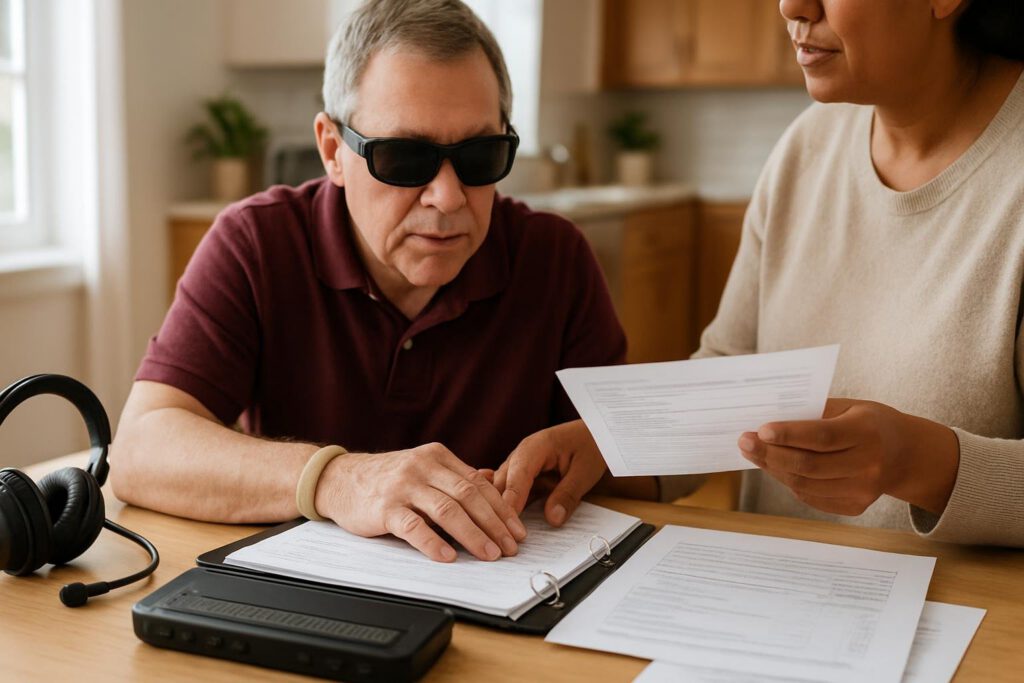
Preparation is key to a successful Deafblind communication assessment. The following checklist outlines the essential steps to help you prepare thoroughly.
1. Gather Personal and Medical Information
Compile recent medical records relating to your vision and hearing conditions, including diagnosis details, treatments, and any assistive devices you use. Bringing this information helps assessors understand your sensory profile in context. Also, prepare any existing communication assessments or reports, as these provide historical insight. For example, if you have had previous assessments by audiologists or ophthalmologists, bringing those reports can help avoid repeated tests and speed up personalised planning.
Expert tip: Keep a folder or digital file updated with all relevant documents to make future assessments easier and to track changes over time.
2. Identify Your Communication Preferences
Reflect on how you currently communicate and what works best for you. Consider the communication methods you use most often, such as BSL, tactile signing, lip-reading, braille, or technology-assisted communication. Note any challenges or situations where communication feels difficult. This self-awareness supports a collaborative assessment. For example, if you find ambient noise especially distracting, or rely heavily on tactile signing in close-contact conversations, these are important details to share.
Try writing down specific examples—such as difficulties communicating over the phone, in group settings, or outdoors—to help the assessor understand your real-world communication environment.
3. Arrange Suitable Support for the Assessment Day
Ensure you have the right communication support in place for the assessment itself. This could be a specialist Deafblind interpreter, an experienced communication support worker, or a personal assistant familiar with your communication style. Contact IntegraSense’s specialist Deafblind interpreting services for guidance on booking this support.
Common mistake: Not arranging adequate communication assistance beforehand can lead to delays or misunderstandings during the assessment. Confirm your support’s availability well in advance to ensure a smooth process.
If you are unsure what kind of support you might need, early discussions with IntegraSense or local Deafblind organisations can clarify options tailored to your needs.
4. Prepare Your Environment
Organise a quiet, comfortable, and well-lit space for the assessment. The assessor may come to your home or an agreed venue. Minimising background noise and distractions is important for optimal communication and concentration. For example, turn off televisions, radios, or busy machinery, and choose a room with adequate space if tactile signing is used.
Think about seating arrangements too—both you and the assessor should be positioned to facilitate clear communication, whether through sight, touch, or hearing aids. If the assessment is remote or online, test the technology beforehand to avoid interruptions.
5. Discuss Goals and Concerns with Family or Carers
Talk through your aims for the assessment and any specific concerns with family members or carers who may attend. Their input can provide helpful observations and support during the process. For example, they might highlight situations where communication breakdowns occur or share positive strategies they have noticed.
Make sure everyone understands the importance of the assessment and how they can best support you. This builds a team approach and helps maximise the benefit of the findings.
6. Review Assessment Logistics
Confirm appointment details in advance, including date, time, location, and what to bring. Be aware of travel arrangements and any accessibility requirements. IntegraSense offers free consultations to clarify logistics and preparedness, which can be invaluable if you have complex needs or additional medical appointments on the same day.
Planning time for rest before and after the assessment is also helpful, as the process can be tiring. Consider transport options that accommodate mobility or sensory aids.
Understanding the Assessment Process
Deafblind communication assessments vary depending on individual needs, but typically include:
- Initial interview: Collecting background information about communication history, preferences, and challenges. This is conversational and collaborative, often covering everyday routines, social interactions, and professional life.
- Observation: Assessors observe natural communication in everyday settings. This includes witnessing how you interact with family, carers, and through technology to identify subtle communication cues.
- Direct assessment: Using tools and tasks to evaluate communication abilities across modalities. For example, assessors might test tactile sensitivity, visual tracking, or comprehension of signed languages.
- Collaboration: Engaging with communication supporters, family, and professionals for a holistic view. This team-based approach ensures recommendations consider all aspects of daily life.
The assessors then analyse findings to produce a personalised communication profile and recommendations for support or equipment, which become integral to your communication support planning.
Common Communication Modalities Assessed
- British Sign Language (BSL) and adapted sign languages like Hands-on Signing or Signalong
- Tactile signing and hands-on signing for those with little or no vision
- Speech reading and lip-reading techniques, often combined with hearing aids or cochlear implants
- Use of assistive technologies like hearing aids, braille devices, or voice output communication aids (VOCAs)
- Non-verbal communication such as gestures, facial expressions, and body language, with attention to how these cues change with sensory impairments
Expert assessors tailor the evaluation to what is relevant for you personally, recognising that communication preferences may shift over time or depending on context.
Top Tips for Specialist Assessment Preparation
- Be open and honest: Share what works for you and what doesn’t without feeling self-conscious. Complete honesty leads to better tailored recommendations. It’s normal to feel unsure—your assessor is there to support you, not judge.
- Bring a trusted support person: Having a familiar person can ease anxiety and help clarify communication where needed. They can also remember details or questions you might forget in the moment.
- Ask questions: Clarify anything about the assessment process or results to feel fully informed. No question is too small if it helps you understand your communication needs better.
- Take breaks as needed: Assessments can be intense; pause if you feel tired or overwhelmed. You can request breaks at any time, and assessors will accommodate your pace.
- Follow up: Discuss the assessment report with your support network to implement recommended actions. This might include arranging new communication aids or booking further training.
Comparing Deafblind Assessments: What Sets IntegraSense Apart?
| Feature | Standard Deafblind Assessment | IntegraSense Specialist Assessment |
|---|---|---|
| Multidisciplinary expertise | Limited to communication or sensory evaluations | Combines communication, accessibility, and governance expertise |
| Person-centred approach | Generalised recommendations | Tailored, system-aware solutions for real-life impact |
| Focus | Basic communication needs | High-stakes, complex settings and sustainable outcomes |
| Ongoing support | Often one-off | Includes consultancy, professional supervision, and mediation |
IntegraSense’s assessments are particularly suited to clients with complex communication requirements, including those who work in demanding professional environments or who require integrated support across health, education, and social systems.
Understanding Legal and Professional Standards
It is useful to be aware of the frameworks that guide deafblind assessments and support in the UK. These include the National Standards for Deafblind Workers, Department of Health and Social Care and the National Deafblind Interpreting Standards and Practice Guidelines. These standards ensure that interpreters and assessors provide ethical, professional, and effective support across all settings.
Understanding these standards can help you know your rights during assessments and support delivery, ensuring communications are respectful, fully accessible, and confidential.
Frequently Asked Questions
What is the difference between a deafblind communication assessment and a standard sensory assessment?
A deafblind communication assessment focuses specifically on how combined vision and hearing loss impact communication and daily interaction. It assesses a range of communication methods, whereas standard sensory assessments usually evaluate sight or hearing individually without exploring communication impacts. For example, a hearing test may check volume perception, but a deafblind communication assessment examines how hearing loss affects signing, lipreading, or tactile communication simultaneously with vision loss.
Who can refer me for a deafblind assessment in the UK?
Referrals can be made by health professionals, social workers, education specialists, or individuals and families themselves. Many services, including IntegraSense, offer self-referral and free consultations to discuss suitability. If you have concerns about eligibility for assessment or support packages, it’s advisable to reach out early to begin this process.
How long does a deafblind communication assessment usually take?
Assessment length varies based on individual complexity but typically ranges from one to several sessions over days or weeks, allowing thorough evaluation and observation. Sometimes shorter screenings precede full assessments to identify immediate needs.
Will my assessment report be shared with other professionals?
Reports are confidential and shared only with your consent, usually with relevant professionals involved in your care, education or employment to ensure coordinated support. It is your right to control who receives your information, and you should discuss any concerns with your assessor.
Can I have someone with me during the assessment?
Yes, having a trusted family member, carer or support worker present is encouraged to assist communication and provide additional context. Their presence can also help you feel more comfortable and supported during the process.
Next Steps After Your Assessment
Once your assessment is complete, the detailed report will help shape your communication support plan. This plan guides services to provide the right interpreters, technologies, and reasonable adjustments you need at work, school, healthcare, or in the community.
Through IntegraSense’s tailored consultancy, you can gain ongoing support to implement these recommendations effectively and review them regularly as your needs evolve. This system-wide approach ensures clarity and sustainable outcomes. For example, if you start a new job, you can revisit your communication needs with advice from IntegraSense to adapt support accordingly.
For more detailed information and support options, visit our pages on support for individuals and families and our wide range of specialist services.
References
- RNIB: Deafblindness and communication support
- National Standards for Deafblind Workers, Department of Health and Social Care
- National Deafblind Interpreting Standards and Practice Guidelines
Preparing well for your deafblind communication assessment is the first step toward better communication access and independence. With the right knowledge, support, and environment, the assessment can fully capture your needs and empower you with effective solutions.
Get in touch to discuss your needs and find the right support for you.