What if the most defensible response to a workplace grievance is the one that prioritises structured dialogue over rigid documentation? You likely recognise that selecting the correct resolution path is a significant challenge for any modern organisation. Many leaders frequently ask: Mediation vs Formal Investigation: Which is Better for Workplace Complaints?
This article provides a strategic framework to help you navigate this complex decision while ensuring your process remains accessible and professional. Understanding Mediation vs Formal Investigation: Which is Better for Workplace Complaints? is essential for maintaining robust governance and protecting working relationships. We will explore how to balance organisational risk with person-centred care for all staff, including those who are Deafblind or use British Sign Language (BSL). By the end, you will be able to determine Mediation vs Formal Investigation: Which is Better for Workplace Complaints? for your specific professional environment.
Key Takeaways
- Understand the strategic divergence between structured dialogue focused on person-centred outcomes and evidence-based processes designed to establish factual breaches of policy.
- Determine Mediation vs Formal Investigation: Which is Better for Workplace Complaints? by assessing the severity of the allegations and the potential for long-term relationship restoration.
- Prioritise accessibility within every resolution process by integrating specialist communication support, such as British Sign Language (BSL) and hands-on signing for Deafblind participants.
- Maintain the integrity of the decision-making framework through professional supervision, ensuring that all practitioners adhere to high ethical standards and reflective practice.
Understanding the Strategic Divergence: Mediation and Formal Investigation Defined
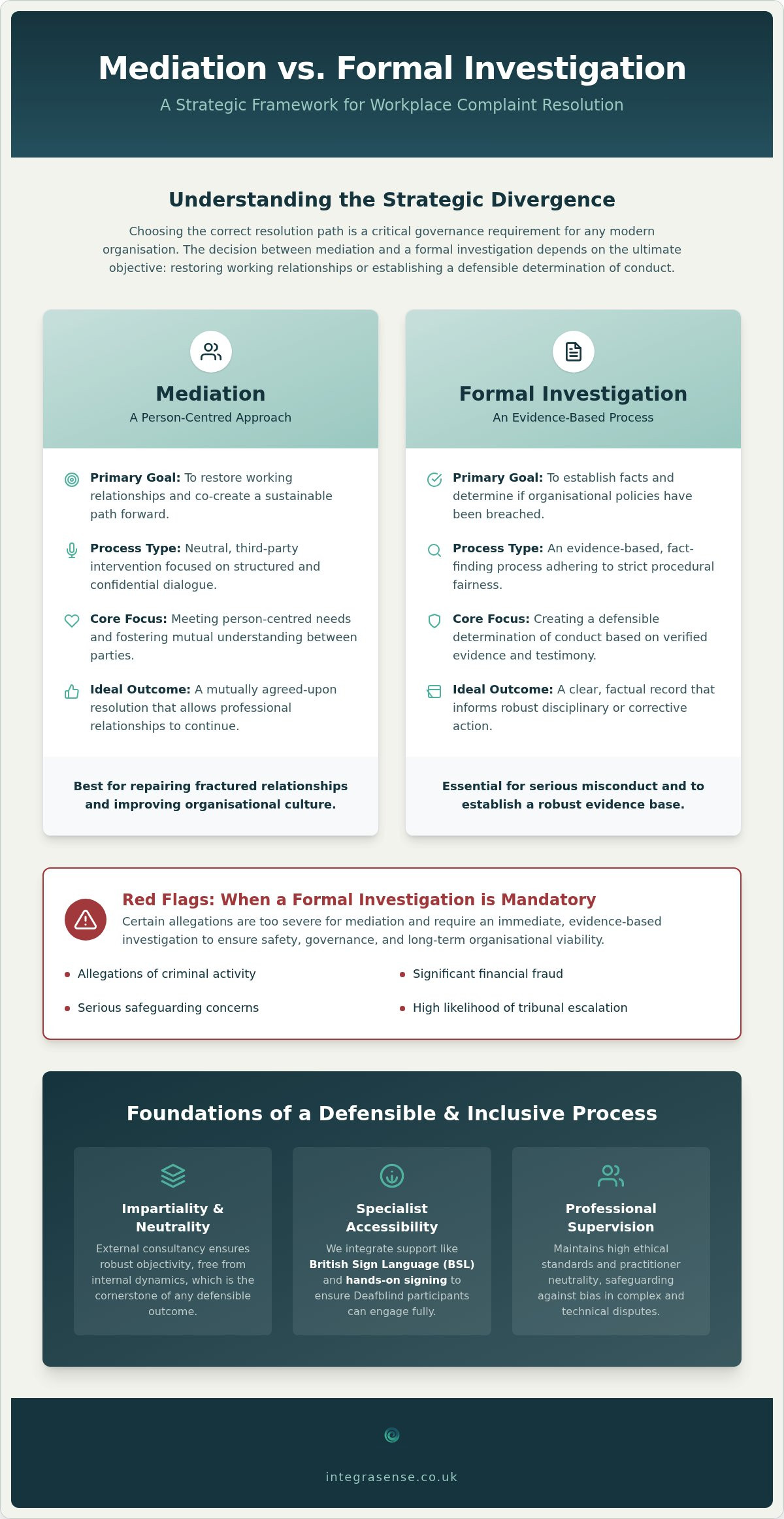
Selecting the correct path for dispute resolution processes is a critical governance requirement. Workplace mediation is a neutral, third-party intervention. It focuses on reaching person-centred outcomes through structured dialogue, allowing parties to co-create a sustainable future. Conversely, a formal investigation is an evidence-based process. Its primary purpose is to establish facts and determine whether organisational policies have been breached. When considering Mediation vs Formal Investigation: Which is Better for Workplace Complaints?, leaders must recognise that the divergence lies in the ultimate objective. Mediation prioritises the restoration of working relationships, while investigation prioritises a defensible determination of conduct. This distinction is vital for maintaining organisational stability and ensuring that the chosen response aligns with the desired strategic outcome.
The Role of Neutrality in Defensible Decision Making
Impartiality serves as the cornerstone of both processes. It ensures that any resulting outcomes are robust and resistant to subsequent challenge. External consultancy provides a level of objectivity that in-house teams often struggle to maintain, particularly during sensitive disputes involving senior staff or specialist communication needs. This neutrality is not merely a preference; it is a fundamental component of professional practice and governance. By utilising an external expert, organisations move away from chaotic internal dynamics toward an optimised resolution. This methodical approach ensures that technical challenges are handled by specialists who value precision and long-term viability, providing a clear, holistic journey from initial conceptualisation to final execution.
Evaluating the Criteria for Selection: When to Prioritise Mediation or Investigation
Determining Mediation vs Formal Investigation: Which is Better for Workplace Complaints? requires an objective assessment of the allegation severity. Serious misconduct or illegal activities necessitate an evidence-based approach. If the primary goal is to repair a fractured working relationship or improve organisational culture, mediation is the superior choice. This consensual path aligns with the principles seen in the EEOC mediation program, where structured dialogue resolves disputes efficiently. Leaders must also evaluate power dynamics and specialist communication needs. For Deafblind staff or those using BSL, the process must be accessible to remain defensible. Inclusive environments require that all parties can engage fully with the resolution tool selected.
Identifying Red Flags that Mandate a Formal Investigation
Certain scenarios render mediation inappropriate. Safeguarding concerns, significant financial fraud, or allegations of criminal activity mandate a formal investigation. These situations require a clear factual record to ensure long-term viability and governance. When there is a high likelihood of a case escalating to a tribunal, establishing a robust evidence base is essential for defensible disciplinary actions. A formal process ensures that every finding is grounded in verified testimony and documentation. This precision allows organisations to manage risk while maintaining professional standards. For complex cases involving combined sight and hearing loss, our specialist communication support ensures that the investigation remains both inclusive and rigorous.
Implementing a Person-Centred Resolution Framework with IntegraSense
Implementing a person-centred framework requires the integration of specialist communication support to ensure that every participant can engage fully. For organisations managing disputes involving staff who are Deafblind or use British Sign Language (BSL), standard procedures often fall short. We provide hands-on signing and accessibility consultancy to bridge this gap, ensuring that the process is not only inclusive but also legally robust. When evaluating Mediation vs Formal Investigation: Which is Better for Workplace Complaints?, the decision must be guided by a commitment to ethical practice and reflective oversight.
Professional supervision for all mediators and investigators is a non-negotiable component of our service. This practice maintains high ethical standards and ensures that practitioners remain neutral, even during the most complex technical disputes. It acts as a safeguard against unconscious bias, allowing for defensible decisions that respect the rights of all parties while managing organisational risk effectively. Our approach aligns with the EEOC guidelines on mediation and investigation, which highlight the importance of choosing the right tool for the specific context.
Ensuring Accessibility and Professional Oversight in Dispute Resolution
We incorporate comprehensive accessibility consultancy into the resolution process for organisations across Kent and the South East. This ensures that technical challenges do not become barriers to justice. By utilising professional supervision, we ensure our practitioners maintain the resilience and objectivity required for sensitive cases. This methodical oversight is essential when delivering conflict resolution in Kent, ensuring your organisation moves from chaotic environments toward an optimised, person-centred outcome.
Achieving Strategic Governance through Person-Centred Resolution
Selecting the optimal resolution path requires a balance of organisational risk and person-centred accessibility. You have explored the distinction between restorative mediation and evidence-based investigation. This choice is a critical governance decision that ensures long-term viability. By prioritising specialist communication support, such as British Sign Language (BSL) and hands-on signing for Deafblind participants, you ensure that every process remains inclusive and defensible. Our multidisciplinary expertise across the health, education, and public sectors allows us to provide professional supervision that maintains ethical standards throughout. Determining Mediation vs Formal Investigation: Which is Better for Workplace Complaints? depends on your specific strategic objectives. To discuss how our specialist consultancy can support your organisation with conflict resolution or formal investigations, contact IntegraSense today. We look forward to helping you move from chaotic conflict toward an optimised, professional resolution.
Frequently Asked Questions
When is mediation inappropriate for a workplace complaint?
Mediation is inappropriate when allegations involve serious misconduct, criminal activity, or safeguarding concerns. These scenarios require a factual determination rather than a consensual resolution. If there is a significant power imbalance or a lack of good faith from either party, structured dialogue cannot succeed. In these instances, a formal investigation is necessary to ensure the outcome remains defensible and aligns with organisational governance.
What are the primary benefits of an external formal investigation?
What are the primary benefits of an external formal investigation?
An external formal investigation offers an impartial evidence base that is resistant to challenge. This neutrality is essential for defensible decision making in complex technical fields. Organizations often rely on licensed specialists like Canadian Special Investigations to ensure that such inquiries are conducted with the necessary objectivity and rigor. When determining Mediation vs Formal Investigation: Which is Better for Workplace Complaints?, the investigation path is superior for establishing whether policy breaches occurred. It provides a clear, documented record that is vital if a case escalates.
We ensure full accessibility by providing specialist communication support tailored to the individual. This includes British Sign Language (BSL) interpreting and hands-on signing for Deafblind participants. By incorporating accessibility consultancy from the outset, we eliminate barriers to engagement. This approach ensures that every person-centred resolution is inclusive, allowing all parties to participate in the structured dialogue with precision and clarity.
Can a formal investigation lead to mediation at a later stage?
A formal investigation can lead to mediation once the evidence-based phase concludes. If the findings suggest that the complaint stems from interpersonal friction rather than gross misconduct, mediation becomes a viable tool for restoration. Utilising mediation at this stage allows the organisation to repair working relationships and improve workplace culture, moving from a rigid factual determination toward an optimised, long-term resolution.