
The most robust safeguarding strategy is not a reactive shield but a proactive, precision-engineered framework for professional conduct. While many organisations struggle to define exactly what is safeguarding in the context of the March 2026 statutory updates, true protection relies on moving beyond ambiguity toward a culture of informed, defensible decision-making. You likely feel the weight of responsibility that comes with managing risk in complex communication environments, where the fear of an indefensible choice can lead to professional paralysis.
We’ll provide the clarity you need to regain control over these complex environments. You’ll gain an expert understanding of the latest legal frameworks, including the “Family Help” model and the updated “Working Together to Safeguard Children 2026” guidance. By examining practical steps for risk management and the role of specialist support, this guide ensures your practice remains both compliant and compassionate. At IntegraSense, we believe that technical precision in communication and accessibility is the foundation of modern protection; it allows you to support vulnerable individuals with the quiet confidence of a specialist.
Key Takeaways
- Distinguish between the statutory duties for children and adults to ensure your compliance framework aligns with the Children Act and the Care Act 2014.
- Clarify your professional responsibilities by defining what is safeguarding as a person-centred approach to protecting fundamental human rights.
- Identify the subtle risks and vulnerabilities that emerge in communication-heavy environments where specialist interpreting or support is a legal necessity.
- Strengthen your organisational resilience by implementing professional supervision and External Quality Assurance to validate your safeguarding procedures.
- Develop a strategic approach to defensible decision-making that moves your practice away from reactive crisis management toward optimized, long-term safety.
Defining Safeguarding: The Foundations of Protection and Rights
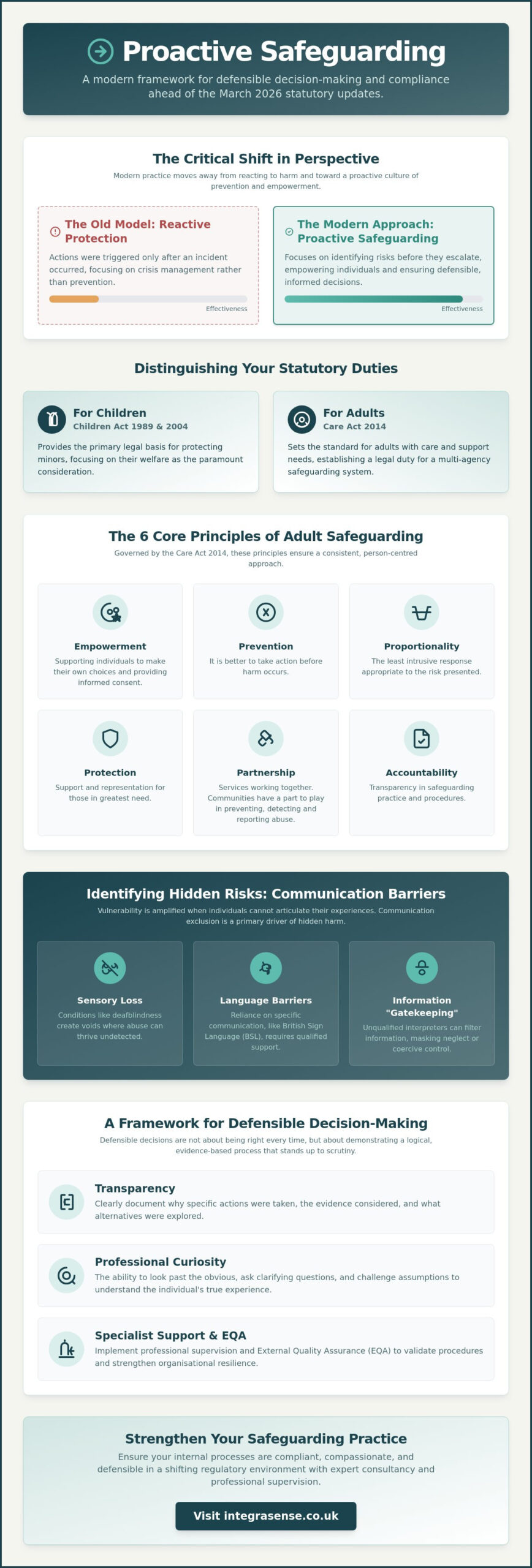
Safeguarding isn’t just a policy; it’s a fundamental commitment to human rights. In the United Kingdom, a clear safeguarding definition involves protecting an individual’s right to live in safety, free from abuse and neglect. It’s a proactive framework that ensures professionals identify risks before they escalate into harm. Understanding what is safeguarding requires a shift in perspective. We’ve moved away from reactive “protection” models that only triggered after an incident occurred. Modern practice focuses on preventative measures that empower the individual. While the Children Act 1989 and 2004 provide the legal basis for protecting minors, the Care Act 2014 sets the standard for adults with care and support needs. This distinction is vital for organisations to manage their specific legal duties effectively.
The Six Core Principles of Adult Safeguarding
The Care Act 2014 outlines six principles that govern all adult safeguarding work. These principles ensure that support is consistent and person-centred. Empowerment ensures the individual remains at the heart of every decision, supporting them to make their own choices with informed consent. Prevention encourages acting before harm occurs, while Proportionality is critical to avoid over-intervention in a person’s life by ensuring the response is the least intrusive possible. Protection provides support for those in greatest need. Partnership ensures local solutions through services working together, and Accountability provides the necessary transparency in safeguarding practice. When professionals apply these principles, they move toward a model of technical precision and system harmony.
Statutory Frameworks: The Care Act and Beyond
The Care Act 2014 creates a legal duty for local authorities and healthcare providers to lead a multi-agency safeguarding system. This often intersects with the Mental Capacity Act 2005, which provides the framework for acting or deciding on behalf of individuals who lack the capacity to do so themselves. It’s a complex landscape. The Disclosure and Barring Service (DBS) further supports this ecosystem by preventing unsuitable people from working with vulnerable groups. For many organisations, meeting these responsibilities requires specialist insight. Utilizing expert consultancy and professional supervision from specialists like IntegraSense helps ensure that your internal processes are both compliant and defensible in a shifting regulatory environment.
Identifying Vulnerability and Managing Risk in Complex Environments
Identifying vulnerability requires more than a standard checklist. While age, disability, and cognitive impairment are traditional markers, environmental factors often amplify risk in ways that aren’t immediately visible. When we ask what is safeguarding in a professional context, we’re really asking how we perceive these subtle shifts in safety. Professional curiosity is the most effective tool here; it’s the ability to look past the obvious and question why a situation feels “off.” This proactive approach defines what is safeguarding in 2026, especially for individuals who may be unable to articulate their experiences due to complex needs or communication barriers.
Communication Barriers as a Safeguarding Risk
Communication exclusion is a primary driver of hidden harm. Sensory loss, such as deafblindness, or reliance on British Sign Language (BSL) can create a void where abuse thrives. There’s a persistent risk of “gatekeeping” when family members or unqualified individuals act as interpreters. They may unintentionally or maliciously filter information, masking signs of neglect or coercive control. Ensuring statutory compliance requires expert intervention, such as a specialist deafblind assessment and legal decision making in Kent. Using qualified professionals removes the filter and restores the individual’s voice.
Establishing a Framework for Defensible Decision-Making
Managing risk in complex cases demands a structured approach. Defensible decision-making isn’t about being “right” every time; it’s about demonstrating a logical, evidence-based process that stands up to scrutiny according to statutory safeguarding guidance. A robust decision-making framework includes:
- Transparency: Clearly documenting why specific actions were taken and the alternatives considered.
- Evidence: Rooting choices in observed facts and professional assessments rather than assumptions.
- Professional Rationale: Explaining the logic behind the chosen path and the risks considered.
Practitioners should refer to our guide to defensible decision making in social care to refine their methodology. When standard protocols meet complex barriers, seeking specialist consultancy is the most responsible step toward achieving system harmony and protecting those at risk.
Strengthening Safeguarding Through Professional Governance
Effective safeguarding isn’t the burden of a single practitioner; it’s a structural commitment that requires robust professional governance. When we consider what is safeguarding at an enterprise level, we’re looking at the systems that validate and verify individual actions. External Quality Assurance (EQA) plays a pivotal role here. It provides an objective lens to audit internal procedures, ensuring your organisation’s response to risk is both consistent and legally sound. For broader organizational integrity, many leaders choose to explore Corporate Investigations as a way to identify and mitigate internal risks before they impact safeguarding outcomes. By integrating specialist communication support, you ensure the “voice of the person” isn’t lost in the technicality of the process. IntegraSense acts as a visionary partner in these technical terrains, providing the precision needed to handle your most challenging safeguarding responsibilities with absolute confidence.
The Necessity of Professional Supervision
High-stakes environments demand high-level support. Professional supervision provides a vital safe space for practitioners to reflect on complex ethical dilemmas and manage the emotional impact of their work. It’s a critical tool for preventing vicarious trauma and burnout, both of which can cloud professional judgment and compromise safety. This structured reflection is particularly essential in communication-heavy roles. For instance, BSL interpreter professional supervision offers a strategic model for maintaining resilience while handling sensitive disclosures. It allows specialists to process data accurately while maintaining the professional distance required for objective decision-making.
Actionable Steps for Organisations
Moving from theory to practice requires concrete, measurable actions. Organisations must move beyond a basic understanding of what is safeguarding toward an optimized, proactive stance. Implementing these steps helps move your environment away from the chaotic and towards the controlled.
- Conduct regular accessibility and communication audits to identify and remove barriers that prevent individuals from reporting harm.
- Implement transparent complaint handling and investigation processes that are accessible to those with sensory or cognitive impairments.
- Maintain a culture of accountability where every staff member understands their role in the wider protective framework.
- Ensure that external providers, such as International Student Experiences, demonstrate equivalent safeguarding rigor when organizing educational tours for schools and colleges.
For cases involving complex sensory needs or unique communication barriers, seeking specialist professional consultancy is the most effective way to ensure a defensible outcome. This proactive engagement ensures that your technical challenges are handled by specialists who value precision and long-term viability. By aligning your governance with these expert standards, you transform safeguarding from a compliance requirement into a pillar of organizational excellence.
Advancing Toward a Culture of Professional Resilience
Safeguarding is a dynamic process that requires constant refinement and specialist insight. We’ve explored how moving from reactive protection to proactive empowerment forms the basis of modern statutory compliance. By addressing the hidden risks within complex communication environments, you ensure that every individual’s voice is heard and respected. True excellence in this field isn’t just about understanding what is safeguarding; it’s about embedding defensible decision-making into the very fabric of your organisational governance. This structured approach moves your practice away from the chaotic and towards a state of optimized control.
As you navigate the latest regulatory updates and the nuances of sensory inclusion, you don’t have to manage these complexities alone. IntegraSense provides the professional authority and technical precision required to achieve system harmony in your protective frameworks. Founded by specialists in defensible decision-making and registered in England and Wales, we offer unparalleled expertise in Deafblind assessments and BSL interpreting. Contact IntegraSense today for specialist safeguarding consultancy and defensible decision-making support. By prioritizing precision and statutory compliance, you can transform technical challenges into long-term stability for those you serve. Your commitment to these standards builds a safer, more inclusive environment for everyone.
Frequently Asked Questions
What are the 6 principles of adult safeguarding?
The six statutory principles of adult safeguarding are empowerment, prevention, proportionality, protection, partnership, and accountability. These pillars, established by the Care Act 2014, ensure that support is person-centred and as non-intrusive as possible. By adhering to these, organisations move beyond simple risk avoidance toward a model of optimized, proactive care. This framework ensures that every intervention is evidence-based and respects the individual’s autonomy while effectively managing potential harm in complex environments.
What is the difference between safeguarding and child protection?
Safeguarding is the broad, proactive framework designed to promote wellbeing and prevent harm, whereas child protection is a specific, reactive component of that system. While child protection focuses on responding to children at risk of significant harm, what is safeguarding encompasses the wider preventative measures used to protect all individuals’ rights to live safely. This includes creating inclusive environments, ensuring accessibility, and providing specialist communication support for those with sensory or cognitive impairments.
Who is responsible for safeguarding in a workplace or healthcare setting?
Safeguarding is a collective organisational responsibility, meaning every employee has a duty of care to identify and report concerns. In healthcare or professional settings, specific accountability often rests with a Designated Safeguarding Lead or a senior manager. These leaders ensure the organisation meets its statutory obligations under the Care Act 2014. They also oversee the implementation of specialist services, such as professional supervision or BSL interpreting, to maintain system harmony and precise risk management.
What should I do if I have a safeguarding concern about a vulnerable adult?
You should immediately follow your organisation’s internal policy and report the concern to your Designated Safeguarding Lead. If the risk is urgent, contact the local authority’s adult social care team or the police. It’s essential to document your observations accurately to support a defensible decision-making process. Clear, evidence-based records are vital for ensuring that what is safeguarding remains a transparent and effective process for protecting the individual’s rights and safety.