
A traumatic account can affect an interpreter even when the event happened to someone else. This indirect exposure is vicarious trauma, and managing vicarious trauma for interpreters means recognising its effects and using practical support around difficult assignments.
That impact is not a sign of personal weakness. Interpreters for the deaf may encounter distressing material across different settings, and interpreting in the first person can bring the speaker’s account particularly close. The effects can touch mental, emotional and physical wellbeing.
This article explains vicarious trauma and how it differs from burnout and compassion fatigue. It explores why sign language interpreters may face specific pressures, how to recognise possible effects, and which personal, professional and team resources can support a more sustainable approach to the work.
Key Takeaways
- Separate the patterns of vicarious trauma, burnout and compassion fatigue to better understand what may be affecting you.
- Use clear role boundaries and confidentiality practices to support clients while maintaining professional distance.
- Build practical support around assignments, including grounding techniques, planned recovery time and confidential professional debriefing.
- Consider how BSL interpreting may shape your experience, and identify support that fits your work.
What Is Vicarious Trauma?
Vicarious trauma can arise through indirect exposure to another person’s traumatic experience, including their first-hand account. In British Sign Language (BSL) interpreting, the interpreter conveys the speaker’s words and perspective. Using the first person, such as signing “I was afraid”, may intensify emotional embodiment by placing the interpreter briefly within the speaker’s viewpoint. This is part of the interpreting task, but repeated exposure can affect wellbeing.
Distinguish conveying a message from taking responsibility for its emotional content. During an assignment, an interpreter can use deep breathing, a relaxed upright posture or focused note-taking to stay grounded in the linguistic work. These practical tools help maintain attention and mental footing; they do not dismiss the speaker’s experience. Afterwards, a deliberate transition, such as changing out of work clothes, can help mark the assignment’s end.
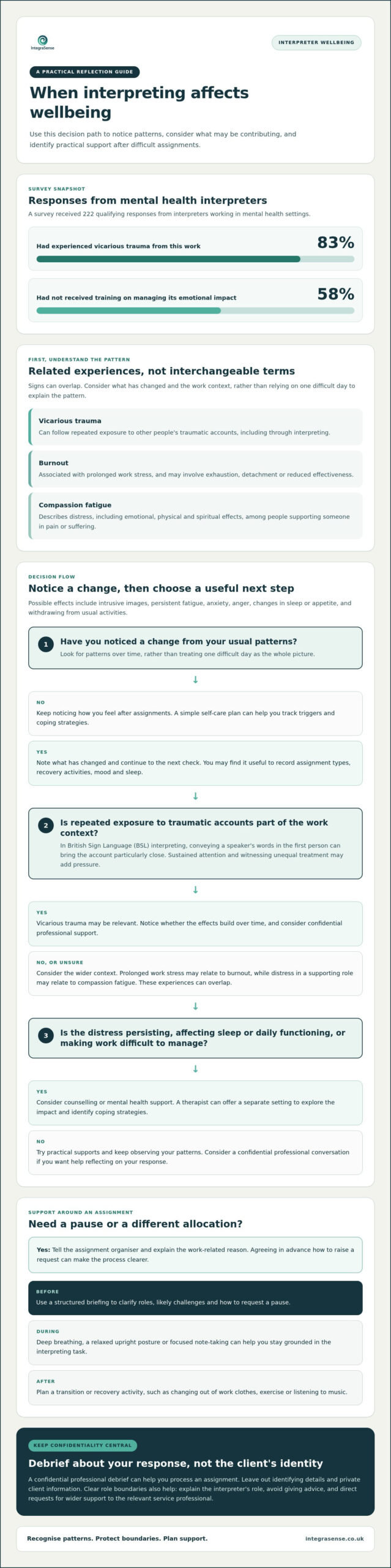
Effects may be emotional, physical or spiritual. An interpreter might notice intrusive images after a distressing account, persistent fatigue, changes in sleep or appetite, or a sense of disconnection from personal beliefs. These experiences can build over time. Noticing a change from usual patterns is a useful first step towards deciding what support may help.
Informal debriefing can create confidentiality risks if the conversation reveals a client’s identity or private account. Keep discussions with a professional focused on your response, and leave out identifying details. Confidentiality is foundational to trust, and interpreters’ ethical codes prohibit sharing clients’ private information.
Clear boundaries help too: explain the interpreter’s role at the outset, avoid giving advice, and direct requests for wider support to the relevant service professional. Managing vicarious trauma for interpreters includes recognising when emotional processing calls for a confidential, professional setting rather than an informal conversation.
Vicarious trauma, burnout and compassion fatigue
These terms describe related experiences, but they are not interchangeable. Vicarious trauma can follow repeated exposure to other people’s traumatic accounts. Burnout is associated with prolonged work stress and may involve exhaustion, detachment or reduced effectiveness. Compassion fatigue describes distress, including emotional, physical and spiritual effects, among people supporting someone in pain or suffering. An interpreter may experience overlapping signs, so focus on what has changed and what support would help.
Look for patterns rather than one difficult day. Examples include persistent fatigue, intrusive thoughts about an assignment, anxiety, anger, changes in sleep or withdrawing from usual activities. A simple self-care plan can help track triggers and useful coping strategies. Note which assignment types feel demanding, which recovery activities help, and any changes in mood or sleep. This record can support a more informed conversation with a trusted professional.
Set boundaries before pressure builds. Tell the assignment organiser when you need a break or a different allocation, and explain the work-related reason without sharing more personal detail than necessary. Agreeing in advance how to raise these requests can make the process clearer and safer.
Seek counselling or mental health support if distress persists, affects sleep or daily functioning, or makes work difficult to manage. A therapist can provide a separate setting to explore the impact and identify coping strategies.
Practical tools include deep breathing before an assignment, grounding during it, and a planned activity afterwards, such as exercise or listening to music. A pre-work ritual, such as putting on a scarf and removing it afterwards, can mark the transition between work and personal time. If you need to discuss work-related support, contact us about support options.
Vicarious trauma among interpreters for the deaf
Sign language interpreting can bring distinct pressures alongside exposure to traumatic content. Interpreters coordinate listening, processing and signing, while managing the interaction between participants. This dual-mode work requires sustained attention. Majority-status dynamics can add another layer, particularly when an interpreter witnesses unequal treatment between a service provider and a Deaf client.
Shared cultural, racial, gender or community experience may make prejudice especially visible. An interpreter might recognise a stereotype in a professional’s response, for example, while needing to keep the exchange accurate and impartial. The assignment can then involve both the client’s distress and the interpreter’s awareness of wider oppression. The effect varies with the assignment and the interpreter’s own circumstances.
A survey of interpreters working in mental health settings received 222 qualifying responses. Among respondents, 83% said they had experienced vicarious trauma from this work, while 58% had not received training on managing its emotional impact. These findings point to a practical need: preparation should address the interpreting task and the interpreter’s wellbeing, not only terminology.
Use a structured briefing to clarify roles, likely challenges and how to request a pause. Afterwards, a confidential debrief can help interpreters process their response without sharing identifying client details. The Institute of Translation and Interpreting recommends briefing and debriefing for interpreters in potentially traumatising settings, alongside collaboration between organisations, intermediaries, interpreters and professional associations.
For teams, make support part of assignment planning. Agree who receives requests for a break, how communication will remain confidential, and what support follows a difficult session. These arrangements help interpreters focus on communication while recognising the specific demands of sign language work.
IntegraSense: BSL Interpreting
IntegraSense provides British Sign Language (BSL) Interpreting for communication involving Deaf people. For interpreters reflecting on the emotional demands of their work, Professional Supervision offers a structured opportunity to explore practice and consider support needs.
These services address different needs: interpreting supports communication during an assignment, while supervision gives professionals space to reflect on their work. Consider Professional Supervision if difficult assignments raise questions about boundaries, emotional impact or sustainable working practices. It can complement personal self-care and confidential support, but does not replace counselling when that is needed.
For BSL interpreting or Professional Supervision, contact IntegraSense to discuss your requirements.
Make interpreter wellbeing part of the plan
Support is most useful when built into professional practice, rather than considered only after a difficult assignment. For teams, this can mean making room for reflective supervision and clear communication about assignment needs. For individual interpreters, it can mean recognising when professional support could help sustain their work.
Managing vicarious trauma for interpreters is an ongoing part of developing thoughtful, sustainable practice. IntegraSense provides Professional Supervision and British Sign Language (BSL) Interpreting, as well as Deafblind Assessments. These services support different communication and professional needs.
If you would like to discuss how IntegraSense can support your requirements, contact IntegraSense. Taking a considered next step can help you build a more supported approach to your work.
Frequently Asked Questions
Does vicarious trauma mean an interpreter cannot remain impartial?
No. An emotional response does not, by itself, mean an interpreter has lost impartiality. Consider whether your attention, recall or decision-making feels different from your usual practice. Reflecting on a specific assignment with an appropriate professional can help distinguish a normal response from a concern that needs further attention.
Can an interpreter’s personal history shape their response to an assignment?
Yes. Details in an account may resonate with an interpreter’s own experiences, even when those experiences differ from the speaker’s. Recognising a personal connection can help an interpreter decide what support they need, while keeping the focus on their own response rather than seeking personal details from the client.
What can interpreters explore in supervision?
Supervision can provide space to reflect on professional judgement, recurring challenges and how an interpreter wants to approach future assignments. An interpreter can discuss personal reactions and learning needs without sharing identifying client details. Agreeing the focus beforehand can help make the session purposeful and maintain appropriate confidentiality.
How can an organisation tell whether interpreter support is accessible?
Ask interpreters whether they know how to raise concerns, request support and understand the next steps. Review whether assignment information and support routes are communicated clearly, then address any practical barriers raised. Gather feedback without collecting details that identify clients, and use it to improve how support is made available across assignments.
What mental health support is available to interpreters in the UK, including NHS and professional services?
Interpreters in the UK can access a range of resources for managing vicarious trauma for interpreters, including professional counselling, mental health support, and confidential professional debriefing. While specific NHS pathways vary by region, dedicated professional services such as IntegraSense Professional Supervision offer specialized guidance tailored to the unique emotional demands of interpreting work.