
What is useful to prepare before a therapy session? Booking a BSL interpreter for therapy can raise practical questions: who should you contact, what should you share, and how can the interpreter understand your communication preferences and the session context? A clear conversation at the outset helps you and the therapist plan the arrangements together.
This guide explains what to ask when requesting interpreting, including how to discuss the therapy setting, your preferred communication approach and practical requirements. It also covers how to coordinate with the therapist and interpreter before the appointment, so everyone understands their role and the session can be planned with care.
Key Takeaways
- When booking a BSL interpreter for therapy, clarify who is arranging the interpreting and how to share the session context and your communication preferences.
- Have the appointment date, format, location or connection method, and relevant context ready before making your request.
- Agree how the therapist and interpreter will coordinate, while recognising that they have distinct roles.
- Before the session, confirm who will attend, how to get in touch and the communication arrangements. Tell the relevant people if anything changes.
Why arrange a BSL interpreter for therapy with the session in mind?
Plan BSL interpreting around access to the therapy session and the person’s communication preferences. The therapist and interpreter have distinct roles: the therapist leads the therapeutic work, while the interpreter conveys communication between the people involved. The interpreter supports the conversation, but does not provide the therapy.
Preferences vary, so do not assume every BSL user communicates in the same way or wants the same arrangements. The person may have preferences about signing pace, positioning, breaks or turn-taking. Discussing these details in advance gives the therapist and interpreter practical information for planning, while leaving the person in control of what works for them.
What should the interpreter know about the therapy session?
Share the appointment format, whether in person or remote, and the broad subject area, such as whether it is a first appointment or a session focused on a particular concern. Relevant preferences might include how people should take turns, where the interpreter should be positioned, or whether the person needs time to process and respond. For a remote session, it can also help to check that the camera view will show signing clearly.
Keep preparation proportionate. The person should decide what sensitive information, if any, to share beforehand. A broad description may be enough to give the interpreter context. Detailed personal history is not needed unless the person chooses to provide it. Agree who will share relevant information and how, rather than leaving expectations unclear.
Booking a BSL Interpreter and Preparing for Therapy
A clear request gives the person arranging the appointment and the interpreting provider the information they need to discuss suitable support. If you are unsure whom to contact, ask the therapist or service coordinating the appointment who will arrange the interpreter. Start by confirming the appointment details and who will coordinate the request.
- 1. Identify the appointment. Note the date and time, expected session length if known, and whether it is an initial or ongoing appointment.
- 2. Ask about interpreting. Contact the therapist or service to discuss how BSL interpreting can be arranged and who will coordinate with the provider.
- 3. Share preferences. Explain any practical communication preferences that may help the session work for you. Do not assume another BSL user will have the same needs.
- 4. Confirm arrangements. Check the agreed format, location or connection method, participants and contact route for questions or changes.
What information and preferences should you share?
Keep the initial details practical. A concise checklist can include:
- Appointment date, time and expected length, if known
- In-person or remote format, plus the location or connection method
- The broad subject area, shared at a level the person is comfortable with
- Preferences about signing pace, interpreter positioning, turn-taking or breaks
Access needs and preferences vary, so ask the person rather than relying on assumptions. They can choose what sensitive information, if any, to share before the session. When booking a BSL interpreter for therapy, a specialist provider can discuss the context and communication requirements. IntegraSense outlines its BSL interpreting services online.
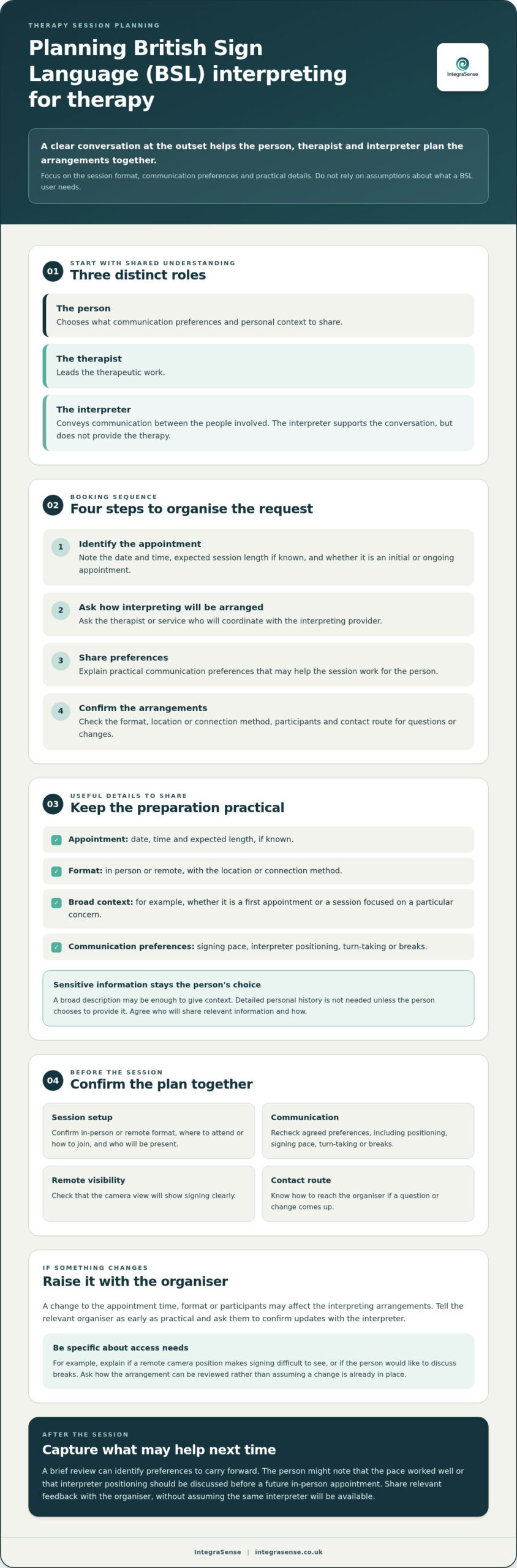
What to confirm before and after a therapy interpreting booking
Before the appointment, check that the practical details still match the plan. Confirm whether the session is in person or remote, where it will take place or how to join, who will be present and how to contact the organiser if something changes. Recheck the agreed communication preferences, such as interpreter positioning, signing pace or breaks.
These checks help everyone work from the same information. A change to the appointment time, format or participants may affect the interpreting arrangements. Tell the relevant organiser as early as practical if anything changes, and ask them to confirm any updates with the interpreter.
How can you raise concerns or adjust arrangements?
If the planned setup does not meet the person’s access or communication needs, raise this with the therapist or booking organiser as early as practical. Be specific: for example, explain that the remote camera position makes signing difficult to see, or that the person would like to discuss breaks. Ask how the arrangement can be reviewed rather than assuming a change is already in place.
After the session, a brief review can help identify preferences to carry forward. The person might note that the pace worked well or that the interpreter’s position should be discussed before a future in-person appointment. Share relevant feedback with the organiser so it can inform later planning, without assuming the same interpreter will be available.
For information about arranging support, contact IntegraSense to discuss BSL interpreting.
Plan the Next Step with Clarity
Good preparation makes arranging a BSL interpreter for therapy a coordinated process. Share the appointment format and broad context, discuss the person’s communication preferences, and confirm who will be present and how to get in touch if arrangements change. Clear expectations help everyone prepare while keeping the therapist’s and interpreter’s roles distinct.
IntegraSense offers BSL interpreting and specialist communication support. A conversation about the appointment can help clarify the communication requirements and the interpreting support to explore. Contact IntegraSense to discuss BSL interpreting support and take a considered next step towards arranging the session.
Frequently Asked Questions
How do I book a BSL interpreter for a therapy session?
Contact the therapist or service arranging the appointment and ask how to request BSL interpreting. Share the appointment date, time, format and location or connection method, along with the broad session context and relevant communication preferences. Clarify who will coordinate with the interpreter, then confirm the arrangements and how to report any changes.
Can I request a particular interpreter for therapy?
You can raise a preference for a particular interpreter with the therapist, service organiser or interpreting provider. Explain why it matters, such as familiarity with your communication style or continuity across sessions. The organiser can discuss the request, but availability cannot be assumed. Confirm what arrangements can be made and how you will be updated if plans change.
What information should I share when arranging a BSL interpreter for therapy?
Share practical details such as the appointment date, time, format, location or joining method, and expected participants. A broad description of the session subject may help with preparation. You can also explain preferences about signing pace, positioning, turn-taking or breaks. Share sensitive personal information beforehand only if you choose to do so.
Is a BSL interpreter part of the therapy session?
The interpreter supports communication between the person and therapist, but does not provide the therapy. The therapist leads the therapeutic work, while the interpreter conveys what each person communicates. Clarifying these distinct roles before the appointment can help everyone understand how the conversation will be supported. The person can also discuss practical communication preferences with the organiser in advance.